Home Volume 6 Number 1

Aug. 2007 · Volume 6 Number 1

Volume 6 Number 1

Articles in this issue

Why Did People Get Sick?

Whatever Happened to Pfiesteria?
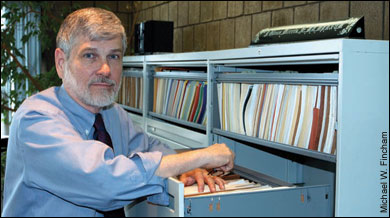
Watermen along the Pocomoke River were telling the press they were getting sick. The culprit could be Pfiesteria piscicida, a dinoflagellate in the river that was suspected of releasing a toxin that could cause sick fish - and now sick fishermen. Exposure to waters with Pfiesteria or its unnamed, look-alike cousins could be a health risk to people working, boating, or living around the Bay. Chesapeake Quarterly, Maryland Sea Grant's quarterly magazine, reports on research, extension, education and other Chesapeake Bay issues and activities of interest to the marine community. It is produced and funded by this program, which receives support from the National Oceanic and Atmospheric Administration. Managing Editor, Sandy Rodgers; Contributing Editors, Jack Greer and Michael Fincham; Science Writers, Erica Goldman and Jessica Smits. more . . . about Why Did People Get Sick?
How Many People Got Sick?

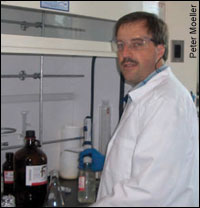
The syndrome never had a name that stuck for long. It's been called 'the Pfiesteria thing,' the Pocomoke syndrome, the Estuarine-Associated Syndrome, and finally the Possible Estuary-Associated Syndrome, or PEAS. Chesapeake Quarterly, Maryland Sea Grant's quarterly magazine, reports on research, extension, education and other Chesapeake Bay issues and activities of interest to the marine community. It is produced and funded by this program, which receives support from the National Oceanic and Atmospheric Administration. Managing Editor, Sandy Rodgers; Contributing Editors, Jack Greer and Michael Fincham; Science Writer, Erica Goldman. more . . . about How Many People Got Sick?

Does Pfiesteria Produce a Toxin?

Scientists know that Pfiesteria feeds voraciously on blood and tissue - not to mention other algae - but is it toxic? Does it produce a toxin that it releases in the water, a poison that not only stuns microscopic prey but that might kill fish and possibly sicken people? Chesapeake Quarterly, Maryland Sea Grant's quarterly magazine, reports on research, extension, education and other Chesapeake Bay issues and activities of interest to the marine community. It is produced and funded by this program, which receives support from the National Oceanic and Atmospheric Administration. Managing Editor, Sandy Rodgers; Contributing Editors, Jack Greer and Michael Fincham; Science Writer, Erica Goldman. more . . . about Does Pfiesteria Produce a Toxin?

Was There Another Fish Killer?

There is another scenario for the fish kills blamed on Pfiesteria in the Pocomoke River and other parts of the Chesapeake in the late 1990s - and for the fish kills that have happened since. Chesapeake Quarterly, Maryland Sea Grant's quarterly magazine, reports on research, extension, education and other Chesapeake Bay issues and activities of interest to the marine community. It is produced and funded by this program, which receives support from the National Oceanic and Atmospheric Administration. Managing Editor, Sandy Rodgers; Contributing Editors, Jack Greer and Michael Fincham; Science Writer, Erica Goldman. more . . . about Was There Another Fish Killer?

The Copper Connection

What causes fish kills? Lack of dissolved oxygen in the water can be one cause. Toxins emitted by certain algal blooms another. But the actual mechanism of how toxins and environmental factors like oxygen levels and water quality combine to create trouble can be complicated - and surprising. Chesapeake Quarterly, Maryland Sea Grant's quarterly magazine, reports on research, extension, education and other Chesapeake Bay issues and activities of interest to the marine community. It is produced and funded by this program, which receives support from the National Oceanic and Atmospheric Administration. Managing Editor, Sandy Rodgers; Contributing Editors, Jack Greer and Michael Fincham; Science Writer, Erica Goldman. more . . . about The Copper Connection

More Information

When Pfiesteria piscicida roared into the public consciousness in 1997, harmful blooms became dinnertime conversation in households across the country - practically overnight. But Pfiesteria's place in the spotlight often overshadows the reality that harmful algae pose a much bigger problem than this one, enigmatic, dinoflagellate. Chesapeake Quarterly, Maryland Sea Grant's quarterly magazine, reports on research, extension, education and other Chesapeake Bay issues and activities of interest to the marine community. It is produced and funded by this program, which receives support from the National Oceanic and Atmospheric Administration. Managing Editor, Sandy Rodgers; Contributing Editors, Jack Greer and Michael Fincham; Science Writer, Erica Goldman. more . . . about More Information

Video Spotlights

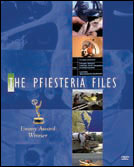
When watermen find wounded fish along a lonely river in Maryland, they kick off a scientific debate and an environmental crisis focused on a mysterious microbe that may - or may not - cause sick fis and sick people. Chesapeake Quarterly, Maryland Sea Grant's quarterly magazine, reports on research, extension, education and other Chesapeake Bay issues and activities of interest to the marine community. It is produced and funded by this program, which receives support from the National Oceanic and Atmospheric Administration. Managing Editor, Sandy Rodgers; Contributing Editors, Jack Greer and Michael Fincham; Science Writers, Erica Goldman and Jessica Smits. more . . . about Video Spotlights