Home Volume 7 Number 2

June 2008 · Volume 7 Number 2

Volume 7 Number 2

Articles in this issue

Greening Gray Streets

Renewing an Urban Watershed

Pipe 263 drains untreated stormwater from the most urban of urban watersheds. It's filled with pollutants that wash off streets and sidewalks or seep into the system from illicit sewage connections. Far from the Bay itself, the pavement here stretches in concrete waves and crabs come only as carry-out. Watershed 263 doesn't harbor a single flowing stream. Not one rocky streambed. No fish. No water striders. No ducks. Chesapeake Quarterly is produced and funded by the Maryland Sea Grant College Program, which receives support from the National Oceanic and Atmospheric Administration and the state of Maryland. Editors, Jack Greer and Michael W. Fincham; Managing Editor and Art Director, Sandy Rodgers; Contributing Editor, Erica Goldman; Science Writer, Jessica Smits more . . . about Greening Gray Streets

The Problem with Pavement

Streams go underground in increasing numbers as they move from forested areas toward urban centers like Baltimore (map above). In Watershed 263, where all the streams lie buried underground, impervious surface area tops 75 percent - which leads to high-volume, flashy stormwater flows, compared with forested areas where rain is absorbed by the ground Chesapeake Quarterly, Maryland Sea Grant's quarterly magazine, reports on research, extension, education and other Chesapeake Bay issues and activities of interest to the marine community. It is produced and funded by this program, which receives support from the National Oceanic and Atmospheric Administration. Managing Editor, Sandy Rodgers; Contributing Editors, Jack Greer and Michael Fincham; Science Writers, Erica Goldman and Jessica Smits. more . . . about The Problem with Pavement

Organic Overload

What's better than local seafood, eaten fresh and close to where it's caught? There is just something special about the taste of home. Not only that, but local food doesn't burn a lot of fuel to get to our plates. Chesapeake Quarterly, Maryland Sea Grant's quarterly magazine, reports on research, extension, education and other Chesapeake Bay issues and activities of interest to the marine community. It is produced and funded by this program, which receives support from the National Oceanic and Atmospheric Administration. Managing Editor, Sandy Rodgers; Contributing Editors, Jack Greer and Michael Fincham; Science Writers, Erica Goldman and Jessica Smits. more . . . about Organic Overload

A Tree Grows on Bruce Street

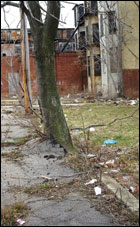
Charlene Pinkney's flowering dogwood tree casts a graceful silhouette on troubled Bruce Street. Her carefully tended garden provides a welcome oasis on a block plagued by abandonment, vandalism, and drugs. Chesapeake Quarterly, Maryland Sea Grant's quarterly magazine, reports on research, extension, education and other Chesapeake Bay issues and activities of interest to the marine community. It is produced and funded by this program, which receives support from the National Oceanic and Atmospheric Administration. Managing Editor, Sandy Rodgers; Contributing Editors, Jack Greer and Michael Fincham; Science Writers, Erica Goldman and Jessica Smits. more . . . about A Tree Grows on Bruce Street

Urban Stormwater and the Bay

Stormwater from city streets ends up in the Chesapeake Bay, carrying heavy metals, organic carbon, nitrogen, and phosphorus to the mix. But among the expensive problems facing the troubled estuary, where does urban stormwater fit in? Chesapeake Quarterly, Maryland Sea Grant's quarterly magazine, reports on research, extension, education and other Chesapeake Bay issues and activities of interest to the marine community. It is produced and funded by this program, which receives support from the National Oceanic and Atmospheric Administration. Managing Editor, Sandy Rodgers; Contributing Editors, Jack Greer and Michael Fincham; Science Writers, Erica Goldman and Jessica Smits. more . . . about Urban Stormwater and the Bay