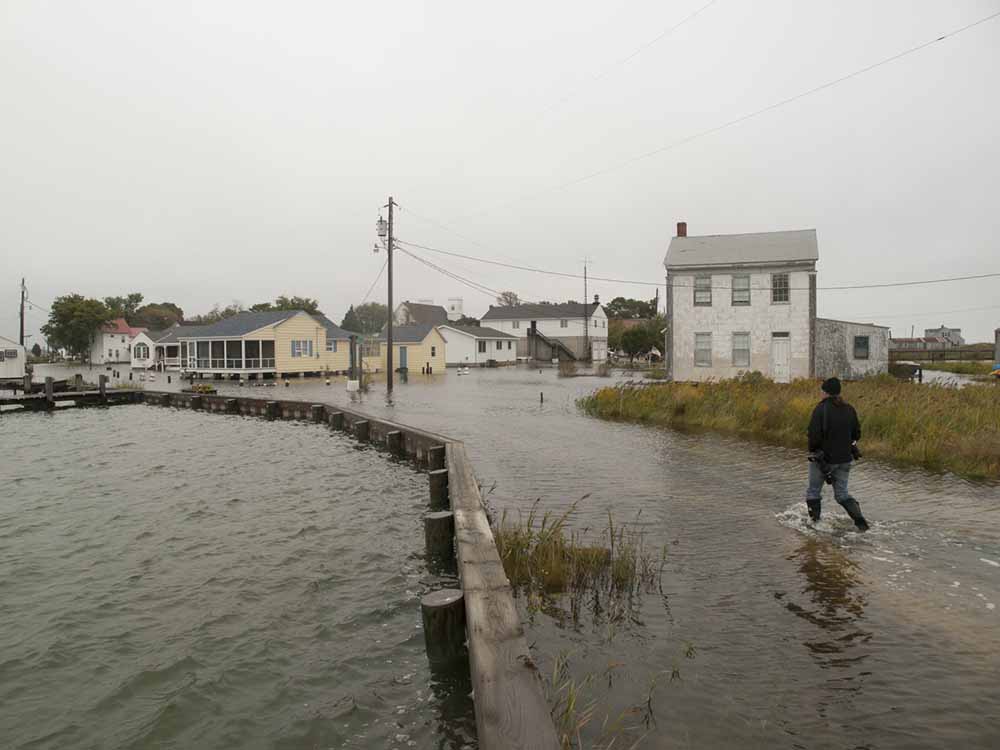
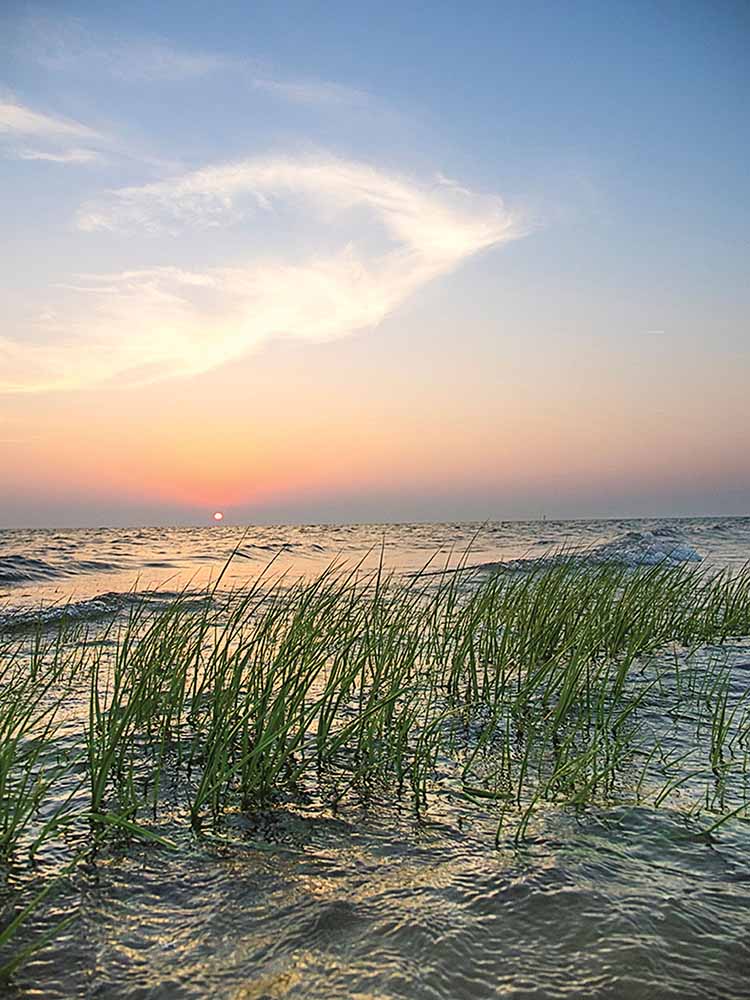
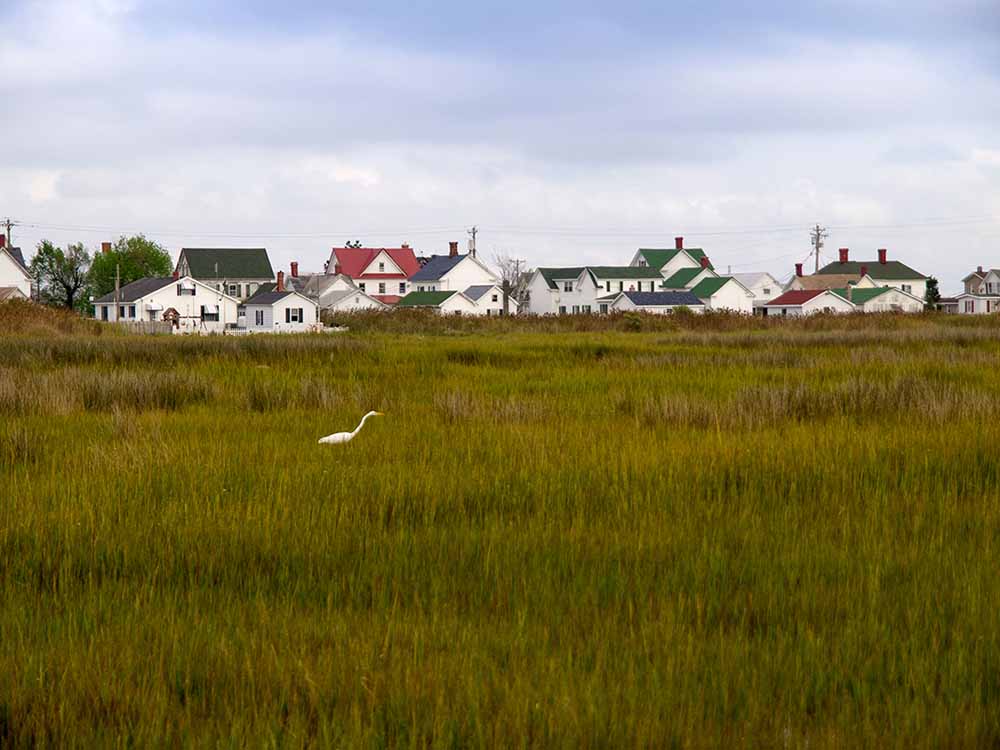
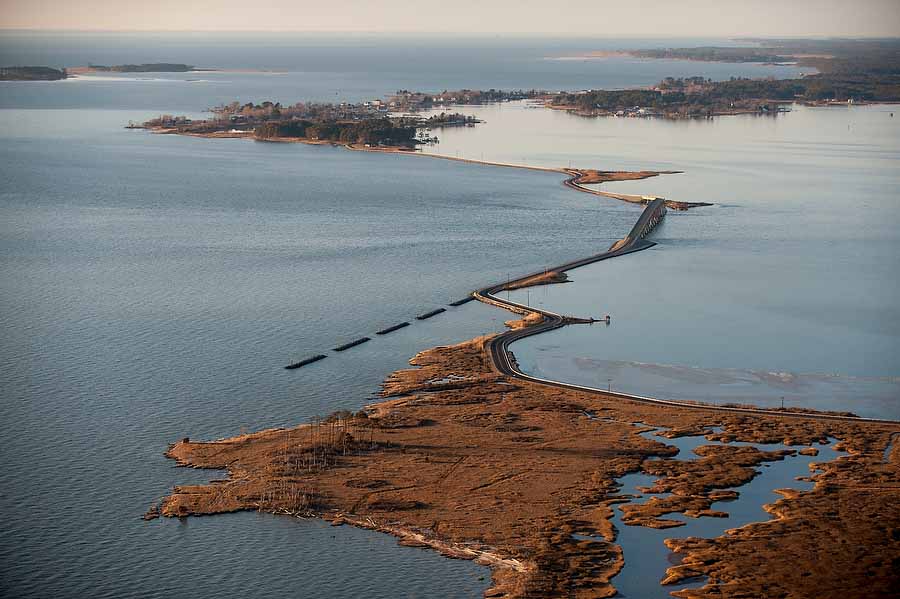
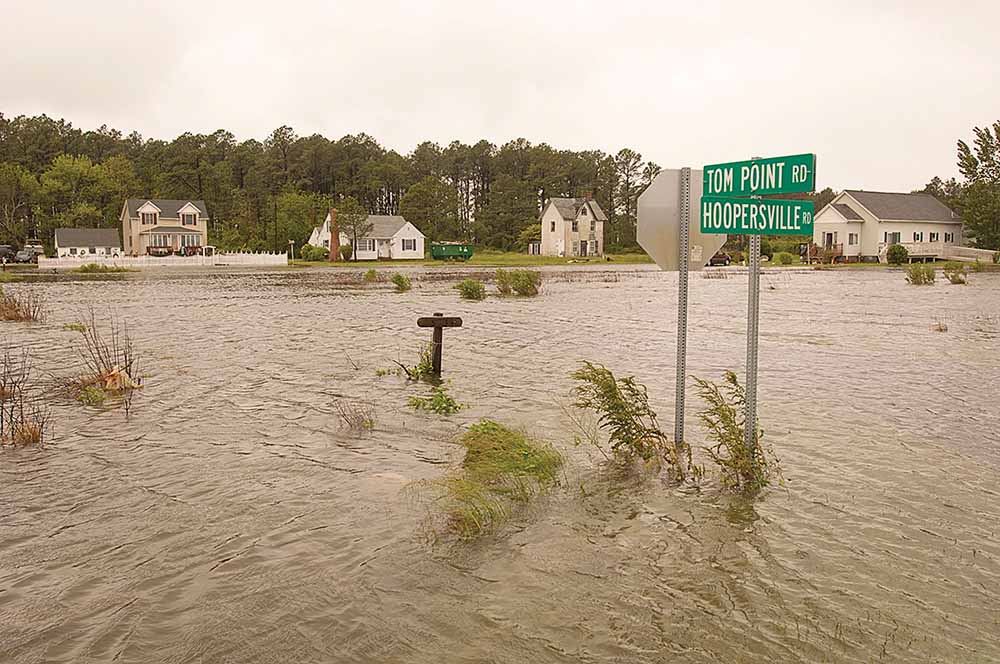
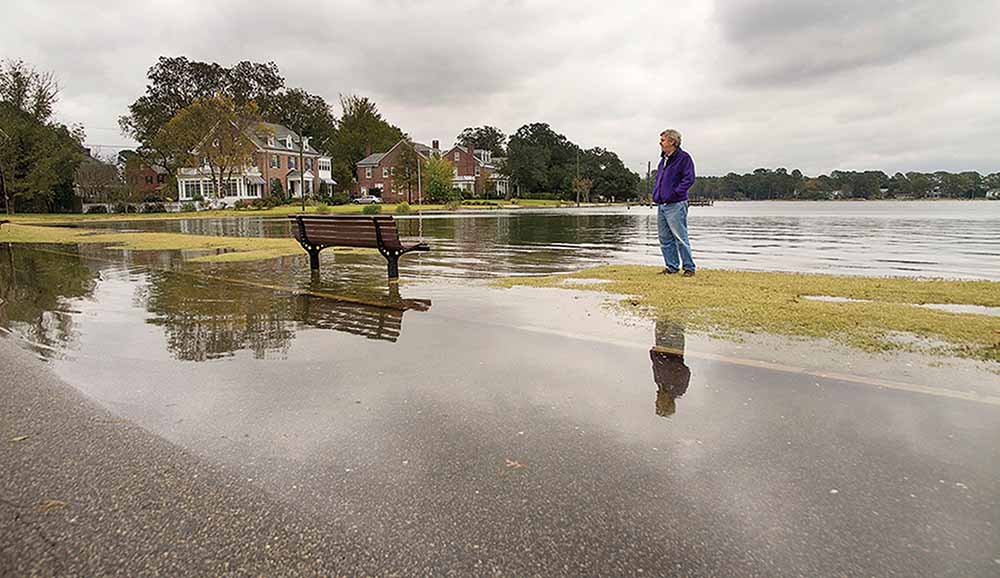
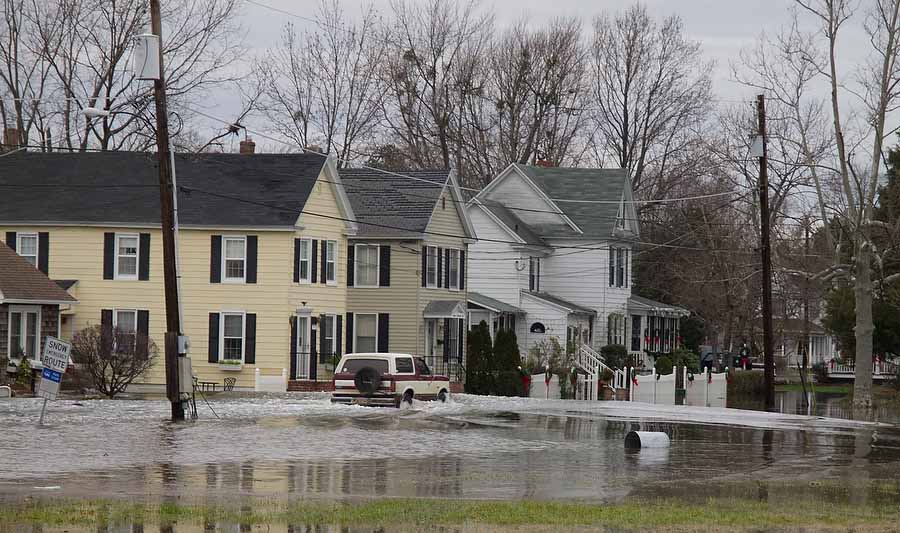
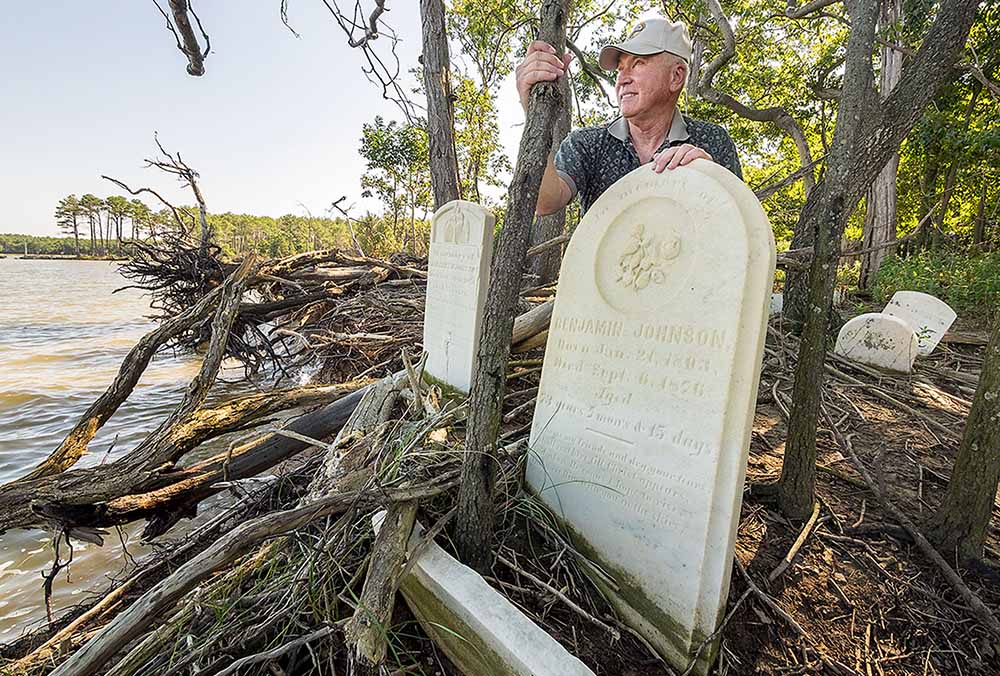
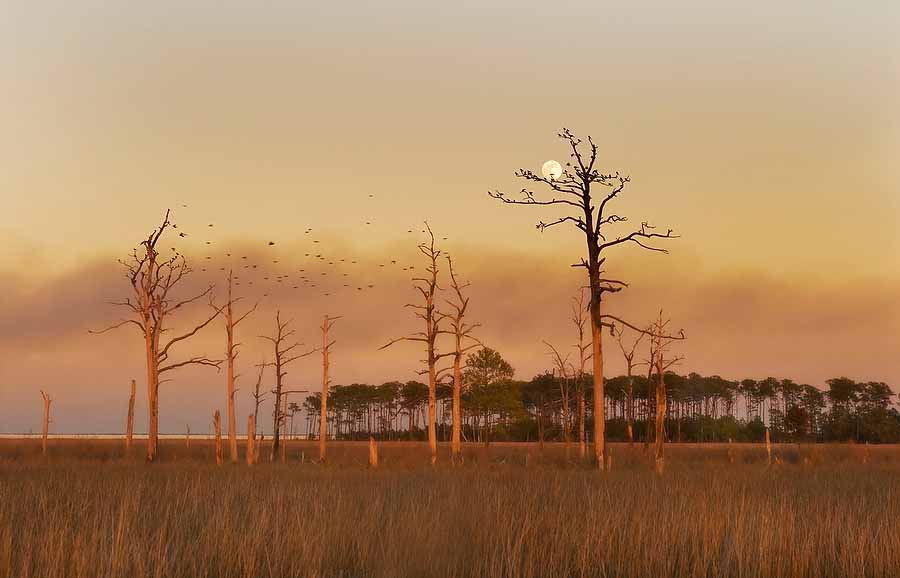
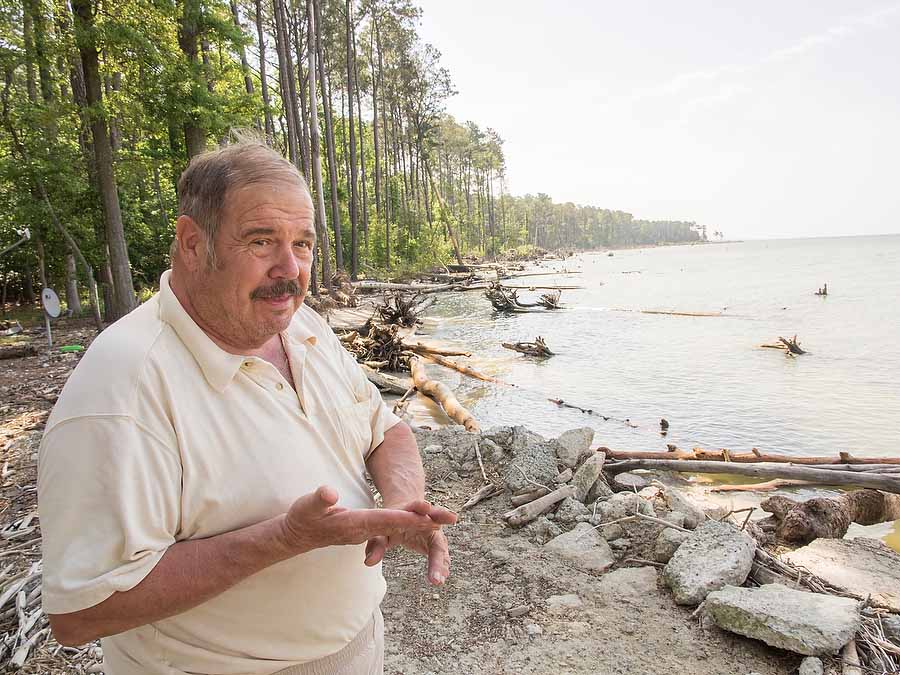
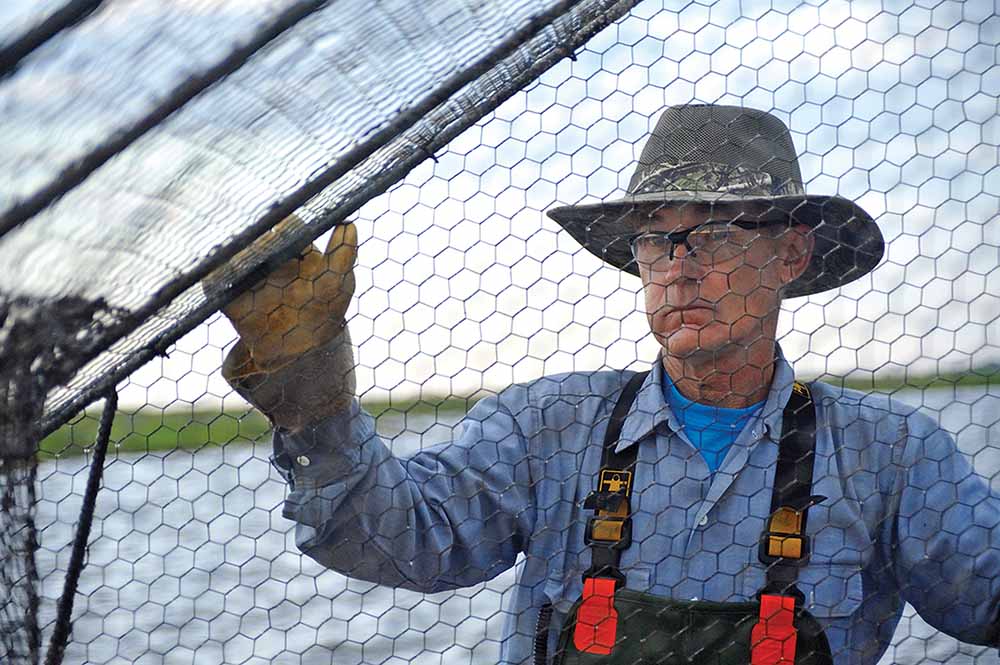
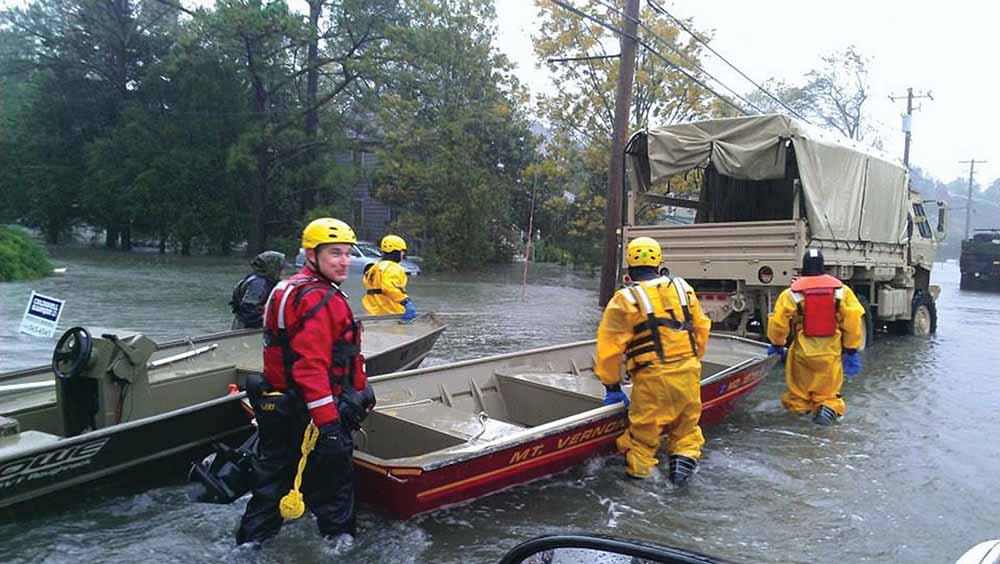
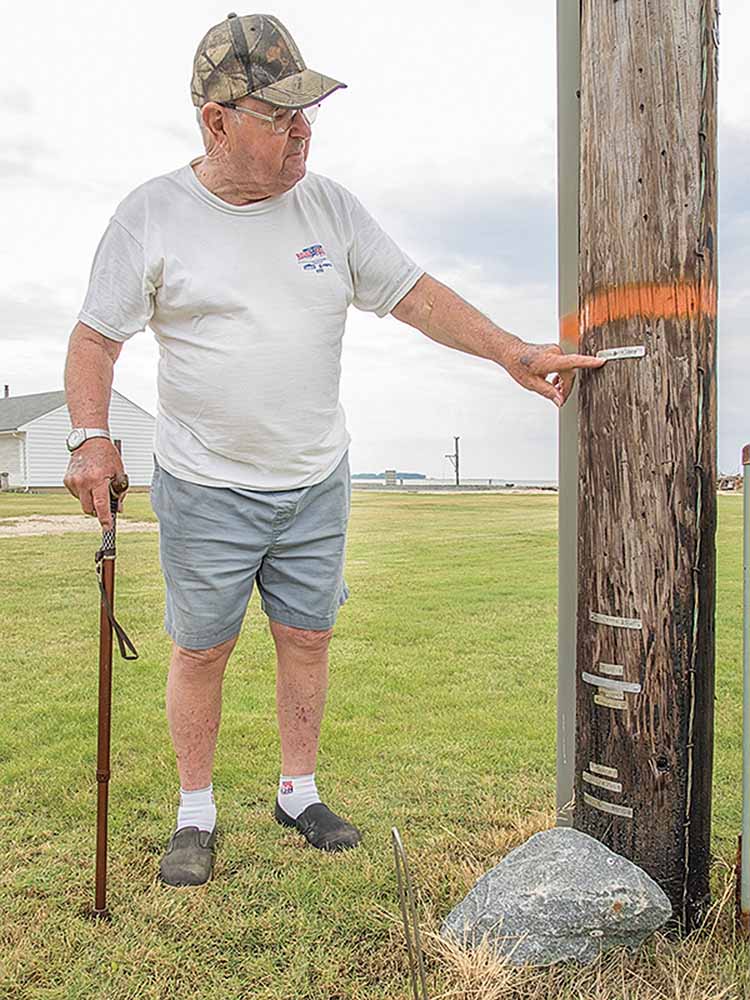
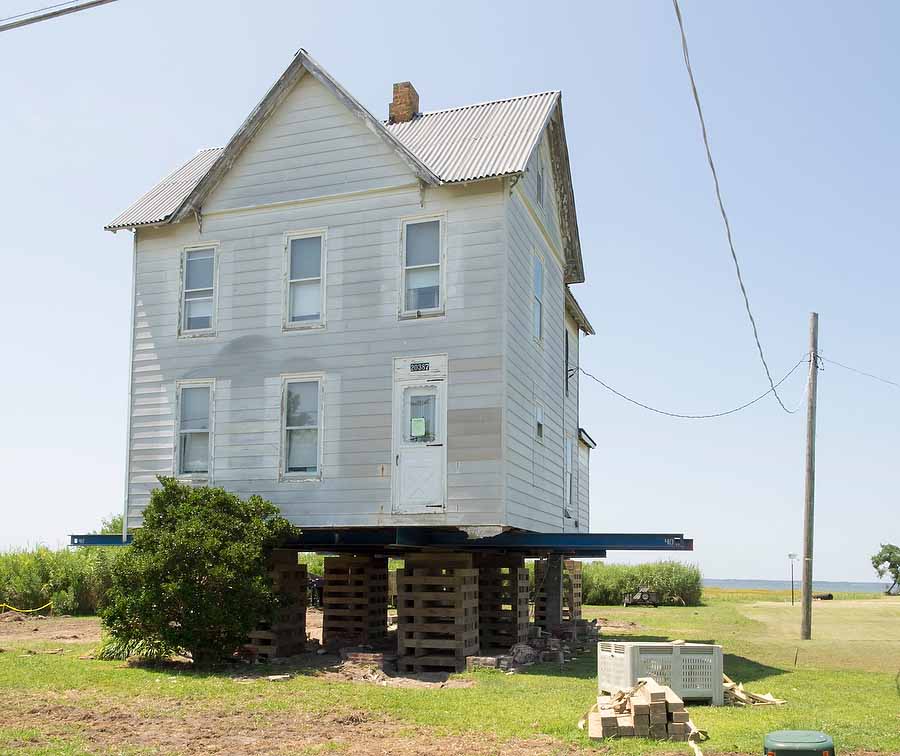
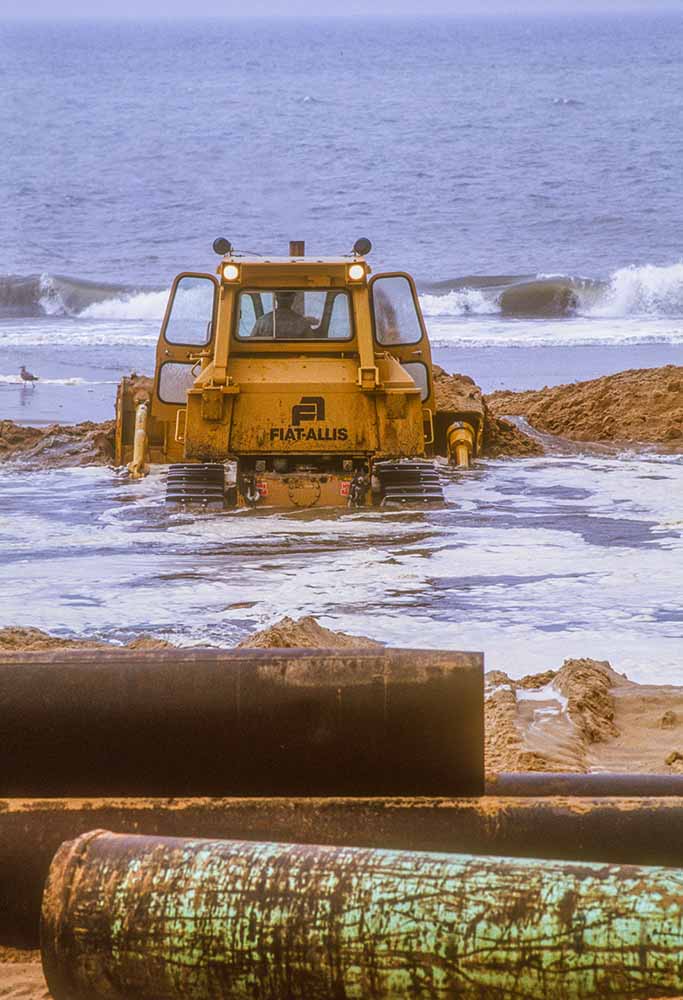
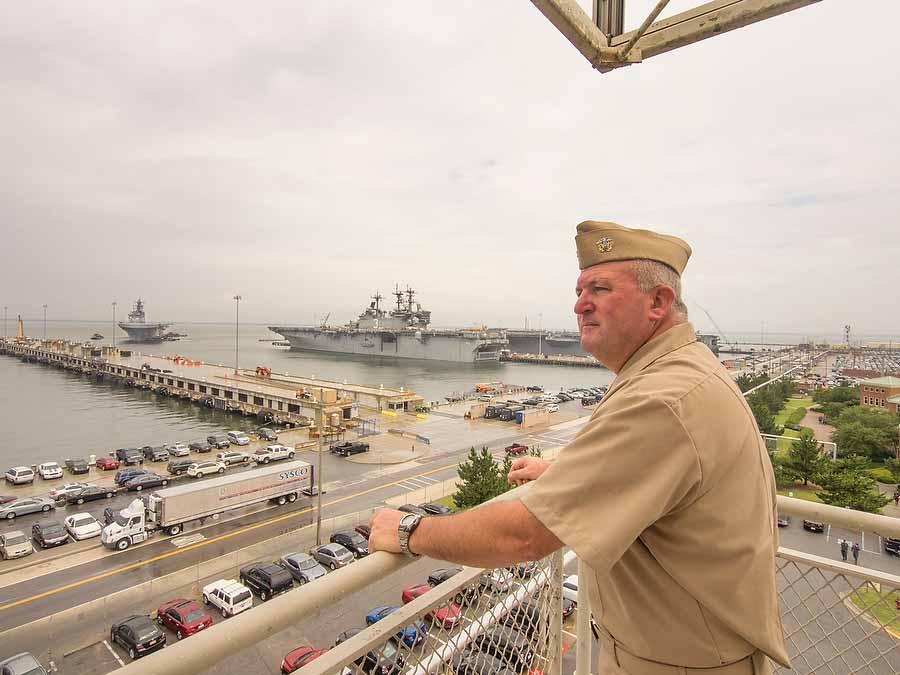
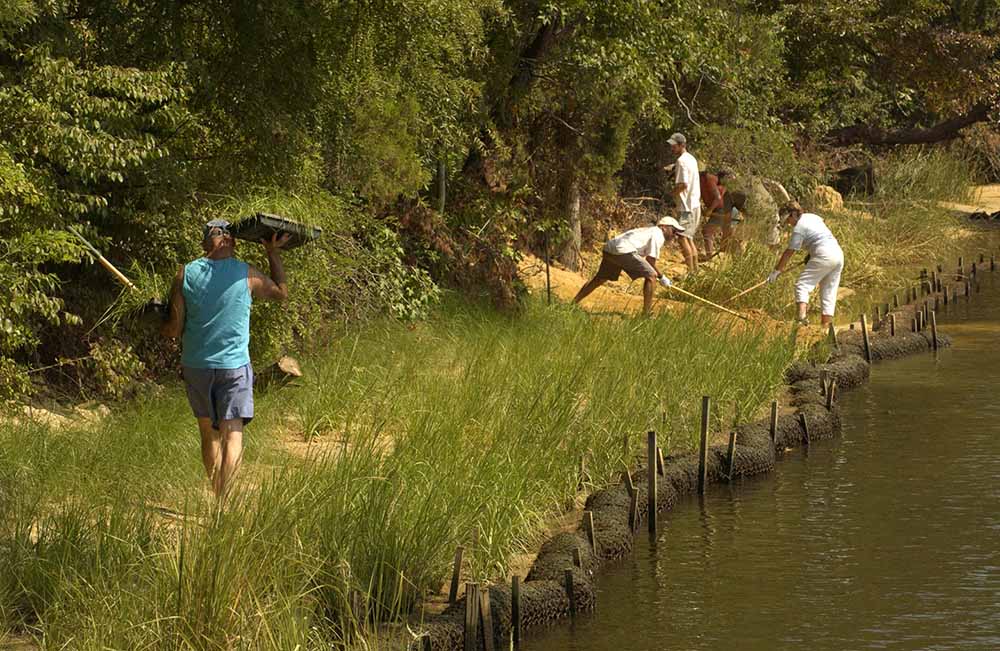
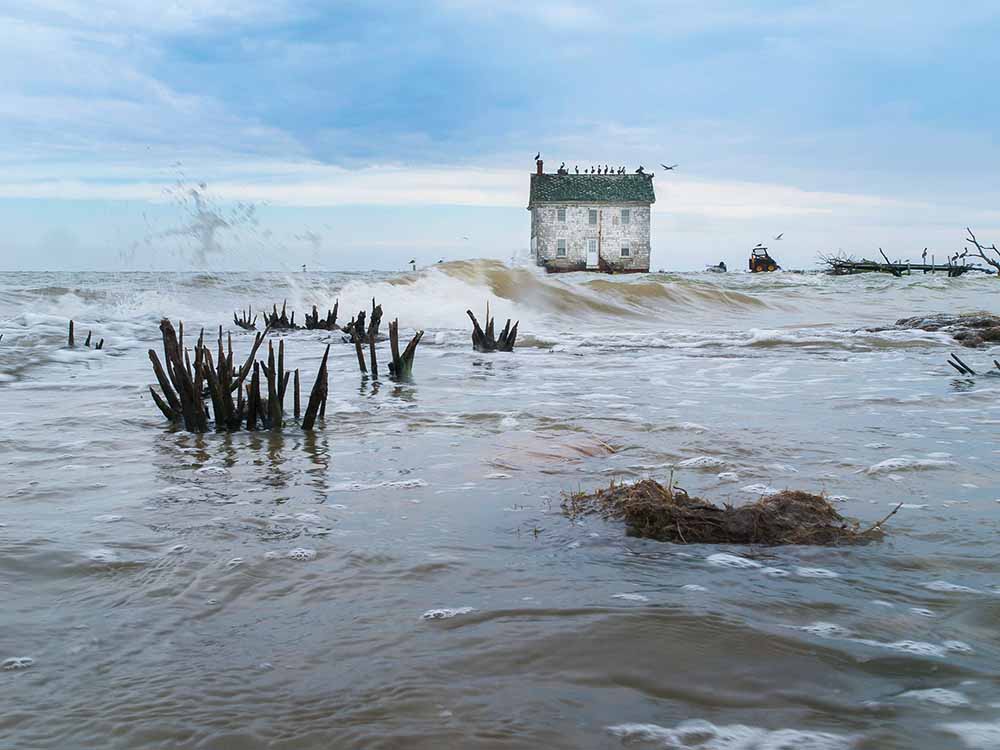
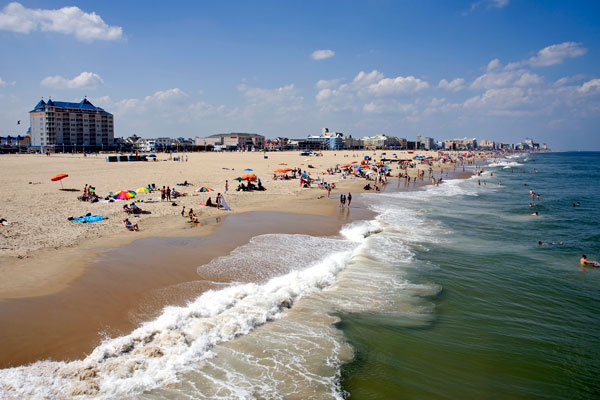
Flood waters overtop a sea wall on Maryland's Smith Island in the Chesapeake Bay. Sea level rise is helping to make high water events like this one worse and more frequent on this fragile island. David HarpSpartina grasses against the setting sun line a portion of the western edge of what's left of Holland Island on Maryland's Eastern Shore. Climate change, brought on by human activities, is causing sea levels to rise around the globe. Scientists estimate that on the Chesapeake Bay, the water level will climb by roughly 1.4 feet by 2050. David HarpThese houses on Virginia's Tangier Island sit just adjacent to acres of marsh grasses and, not far beyond, the open waters of the Chesapeake Bay. Low-lying island communities are especially vulnerable to sea level rise. David HarpSea level rise could reshape coastlines across the Bay, including along the narrow spit of land that makes up Hooper's Island in Maryland. The island loses about 24 acres each year to erosion. David HarpHigh tides and storms often wash out roads in Hoopersville, one of the communities on Hooper's Island still above water most of the time. Only about 100 people live in Hoopersville today. David HarpSea level rise poses risks to urban areas, too, like the Ghent neighborhood of Norfolk, Virginia. These days, even routine high tides can leave portions of this low-lying historic district underwater. David HarpThis flooded street in Cambridge, Maryland, is appropriately named Water Street. It floods routinely during abnormally high tides from the adjacent Choptank River and the city is forced to close it to traffic David HarpJames Adkins, adjutant general of the Maryland Natural Guard, surveys a set of headstones on Maryland's Wroten Island. They are threatened by the encroaching waters of the Chesapeake Bay, which have submerged other graveyards on this island and other locations. Wroten Island, where Adkins' ancestors once lived, is now uninhabited. David HarpIn Dorchester County, Maryland, are many signs of sea level rise, like these tree snags in Bishops Head near the Blackwater National Wildlife Refuge. The trees were killed off by encroaching salt water. David HarpTo reduce erosion along Dorchester County's shoreline, the government should build up two nearby barrier islands, Barren and James, says Bruce Colson, who owns the Taylor's Island Family Campground. Sea level rise allows storms to push water further inland. David HarpMaryland residents like John Barnette, a waterman and head of the Somerset County Swift Water Rescue Team, have seen the toll of sea level rise on their communities. Michael W. FinchamWhen Superstorm Sandy hit Maryland in 2012, Barnette's team helped to rescue residents stranded by flooding in Crisfield, Maryland. Sea level rise will increase the height of storm surges on the Bay's shores. John BarnetteHarold Cartright, a resident of Hooper's Island, recorded the heights of flood waters that a series of big storms pushed onto his property. Here he points to a marker indicating Tropical Storm Isabel in 2003. David HarpHomeowners in Saxis, Virginia, raise the foundation of their house to protect it from flooding. Many Bay residents have few options when it comes to dealing with sea level rise: build seawalls, elevate structures, or move away. David HarpA bulldozer arranges sand in Ocean City, Maryland, as part of a long-running beach replenishment project there. Ocean City is one of many coastal towns that use sand dredged offshore to rebuild beaches that are steadily eroded by the ocean. Sea level rise will likely increase the rate of erosion. David HarpU.S. Navy Captain Bob Clark looks out over Naval Station Norfolk, which he commands. This base, the largest naval facility in the world, is considering raising its piers so that rising waters do not disrupt its bustling operations. David HarpVolunteers plant marsh grasses along a "living shoreline" on the South River in Anne Arundel County, Maryland. This native vegetation can protect shores from erosion and wave damage and create habitat for wildlife. David HarpA little known fact about downtown Washington, D.C., is that significant portions could be severely flooded by the Potomac River, a threat worsened by sea level rise. Workers here test the lowering of a panel into a temporary flood wall that could be set up on 17th Street whenever a major flood threatens and removed when the threat subsides. Michael W. FinchamThis house on Holland Island in the Chesapeake Bay stood for more than a century. But the estuary's water level rose, the island eroded, and the inhabitants left. In 2010, the house — the last one left on the island — was swept into the Bay by encroaching waves. Other Bay islands have disappeared, too. Residents of the remaining inhabited ones, like Smith Island in Maryland, and Tangier Island in Virginia, are looking for ways to avoid the same fate. David Harp
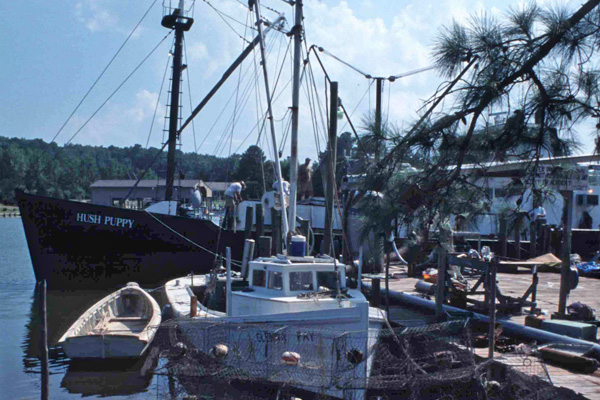
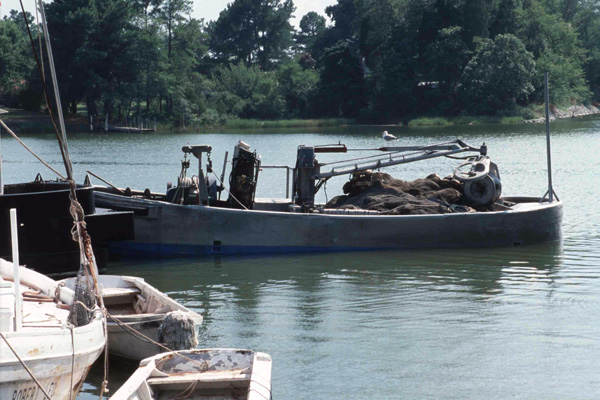
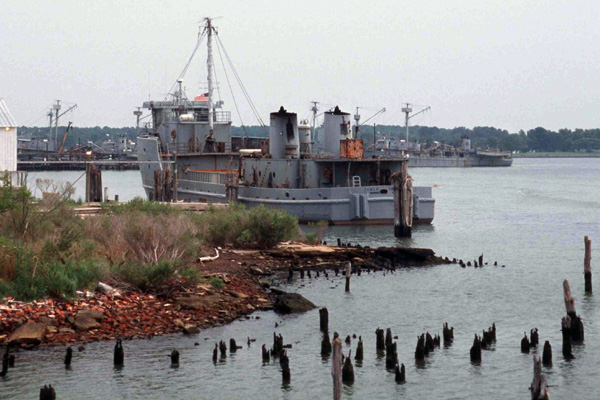
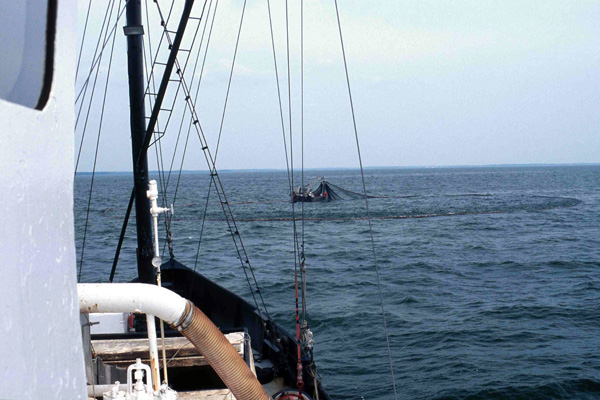
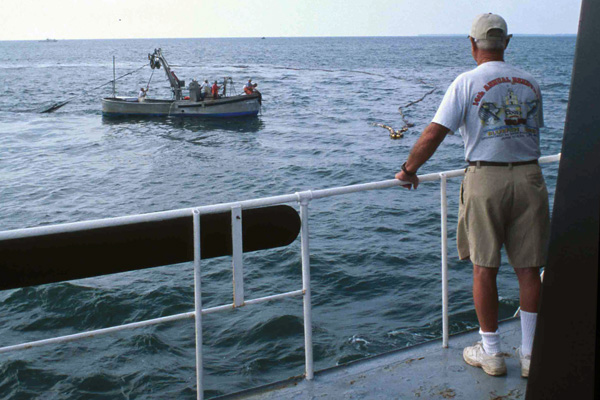
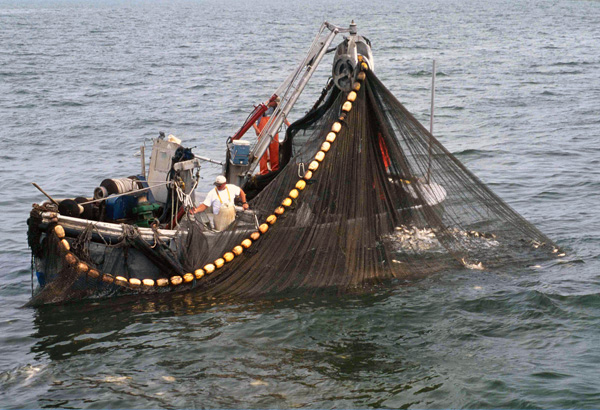
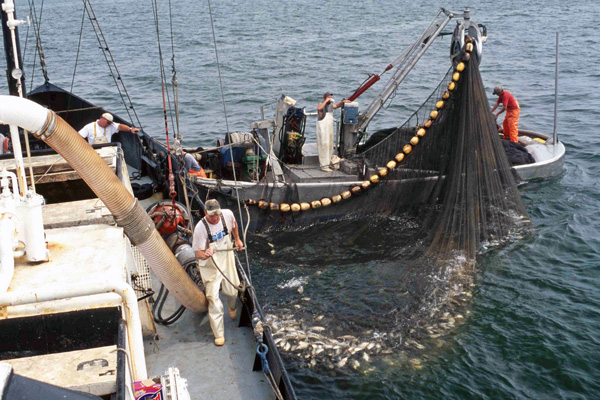
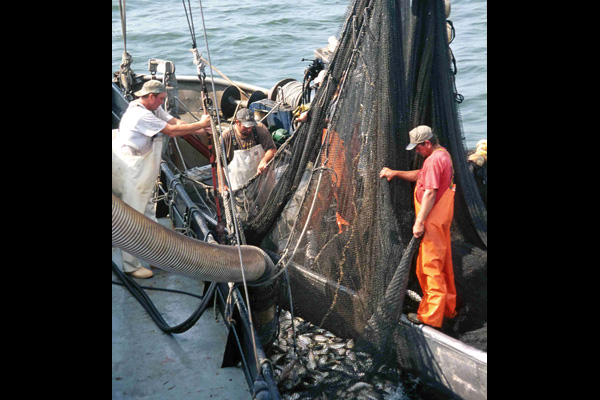
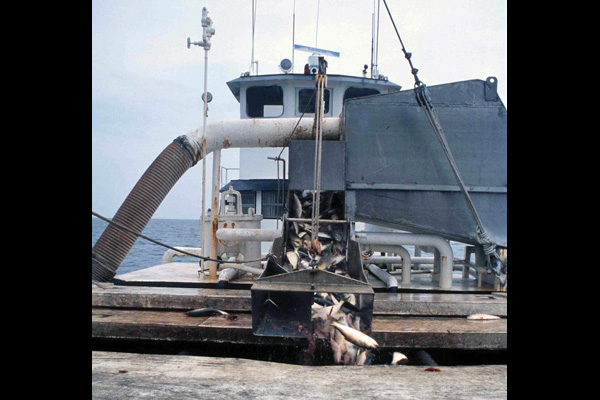
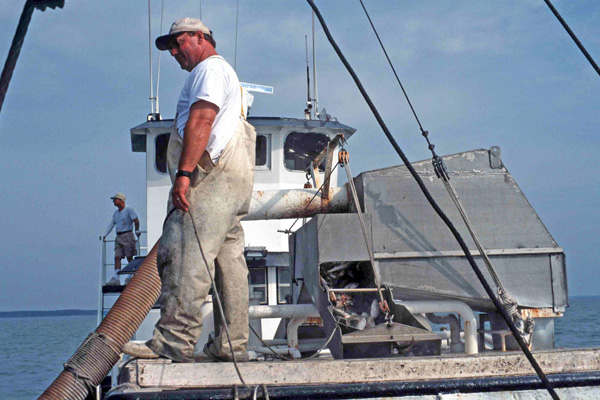
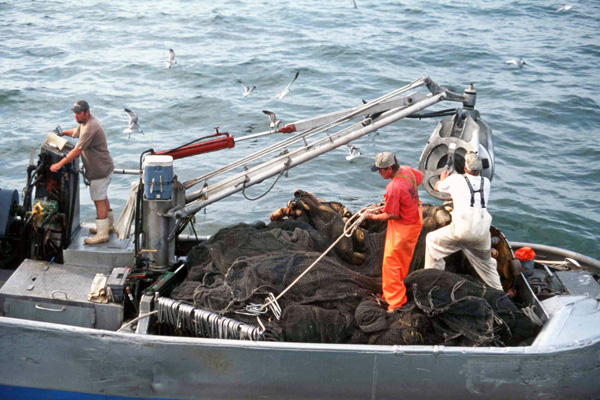
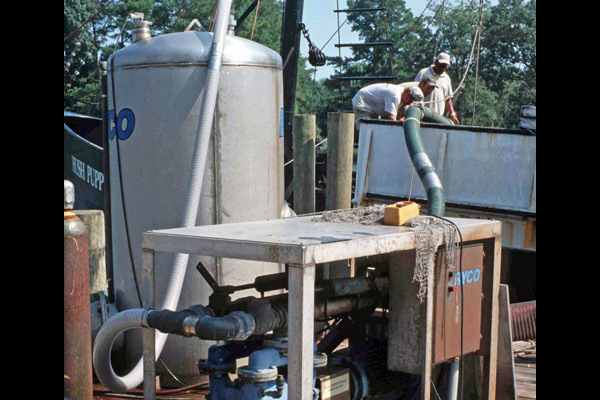
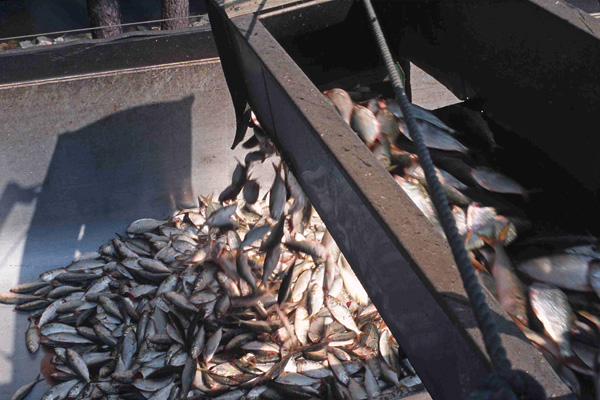
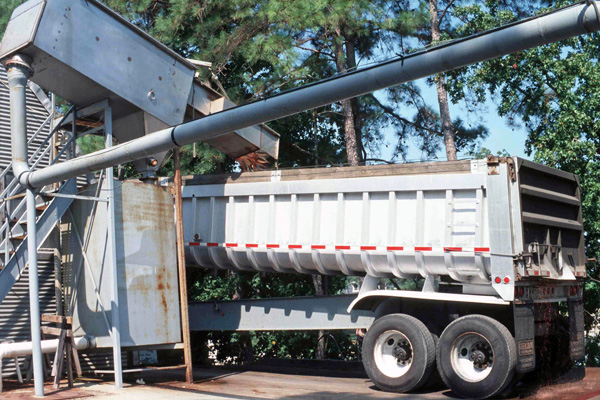
The FV Hush Puppy, an 80-foot steel-bottomed fishing vessel owned by the Rogers family, docked at its home port of Reedville, Virginia. The boat is one of three to five "snapper rigs" fishing for menhaden each year in the Chesapeake Bay. Snapper rigs sell their catches to the bait market, which supplies both commercial and recreational fishermen. Harold AndersonOn the other side of the dock is the Hush Puppy's purse boat, which is pulled behind the larger vessel to fishing grounds. Once there, the five-man crew, directed by a spotter plane to a school of menhaden, put out the "purse seine" net used to catch the fish. Harold AndersonReedville, Virginia is also home to Omega Protein, the last menhaden "reduction" processing facility on the East Coast. Shown here is one of the company's large fishing vessels, which use two purse boats to encircle menhaden schools quicker than the single purse boat used by snapper rigs. Omega's catch is brought back to a processing facility, where it is compressed or "reduced" into oil used for such products as omega-3 diet supplements, fertilizer, paint, margarine, and even lipstick. Harold AndersonCaptain Fred Rogers and his crew aboard their purse boat encircling a school of menhaden, seen from the deck of the Hush Puppy. Harold AndersonRay Rogers watches as his son, Captain Fred Rogers, and his crew begin pulling in the net with the power block on the purse boat. Harold AndersonCaptain Fred Rogers checks the net as the power block hauls in its catch. Harold AndersonCaptain Rogers and his crew in the purse boat reach the Hush Puppy with their haul. Harold AndersonThe Hush Puppy crew puts a flexible hose into the net and begins vacuuming fish into the hold. Harold AndersonMenhaden being vacuumed into the hold of the Hush Puppy. Harold AndersonCaptain Fred Rogers (foreground) and his father Ray Rogers watch the crew as they work to vacuum up all the fish from the net. Harold AndersonThe Hush Puppy crew lowers the power block and secures the purse seine net as they prepare to tie up to the mother ship and head back to port with their catch. Harold AndersonBack at the dock in Reedville, the Hush Puppy crew vacuums the menhaden from the hold into a chute that feeds into a specialized dump truck trailer. Harold AndersonMenhaden from the Hush Puppy's hold slide down the chute into the waiting truck. Harold AndersonWhen the day's catch has been offloaded, the truck will take the fish to market where they will be sold as bait to commercial fishermen (mainly crabbers), and to recreational fishermen (for catching striped bass, bluefish, weakfish, and others). Harold Anderson
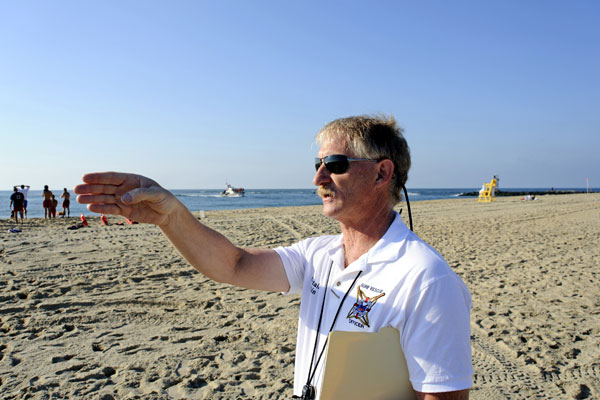
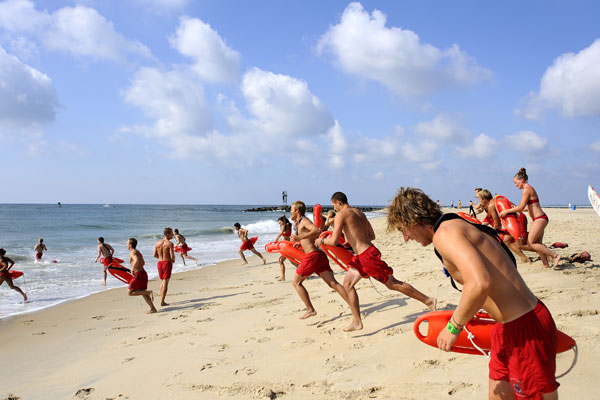
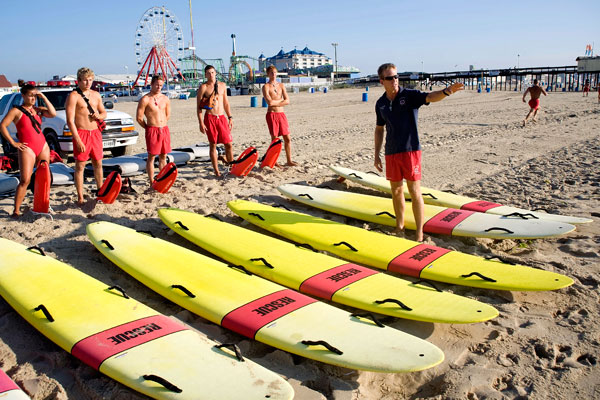
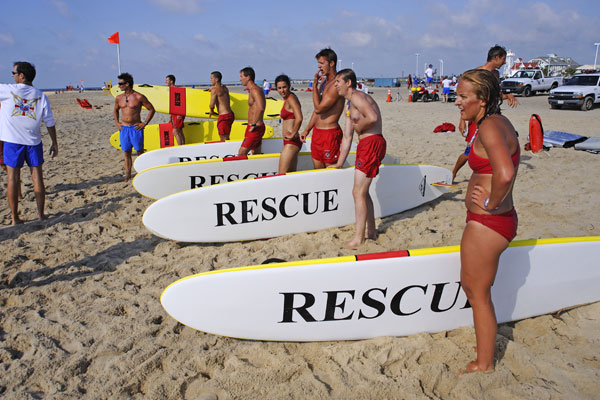
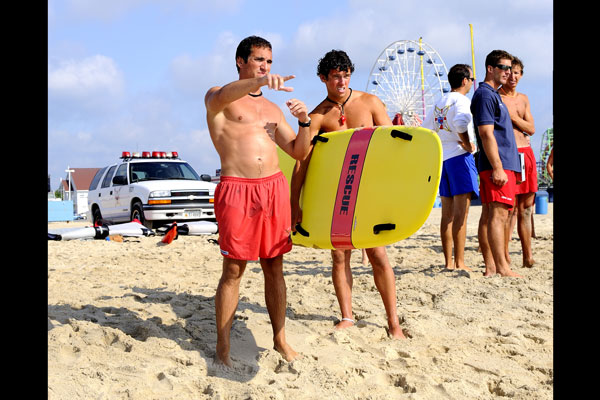
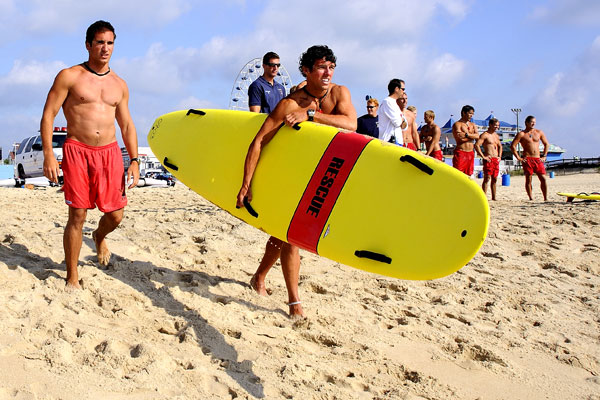
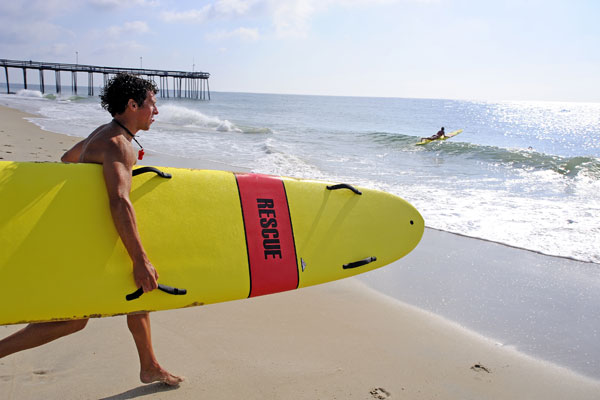
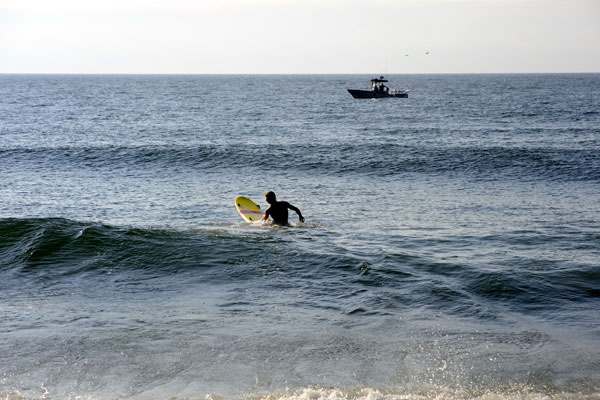
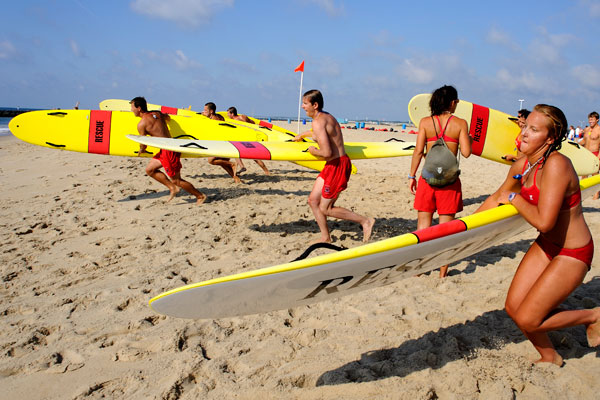
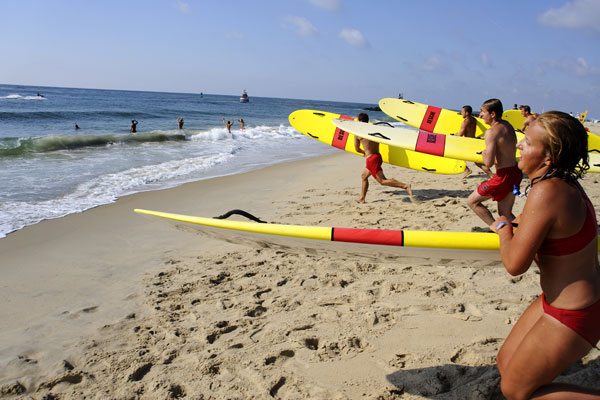
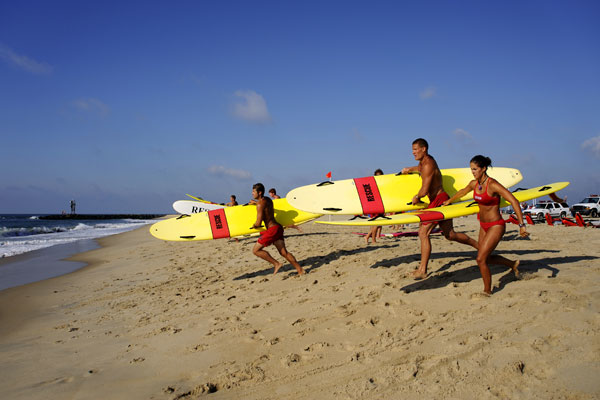
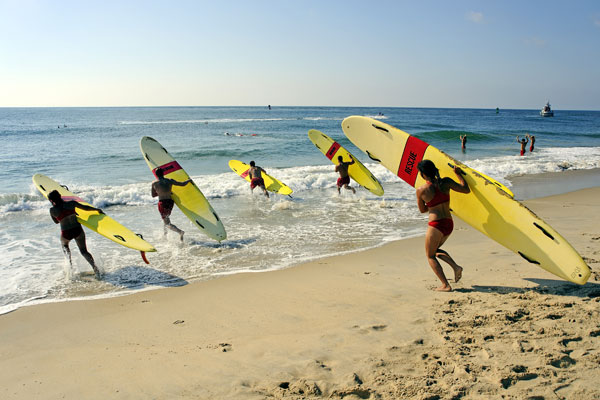
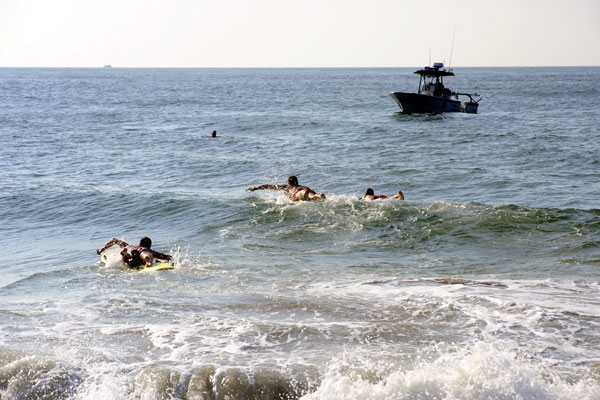
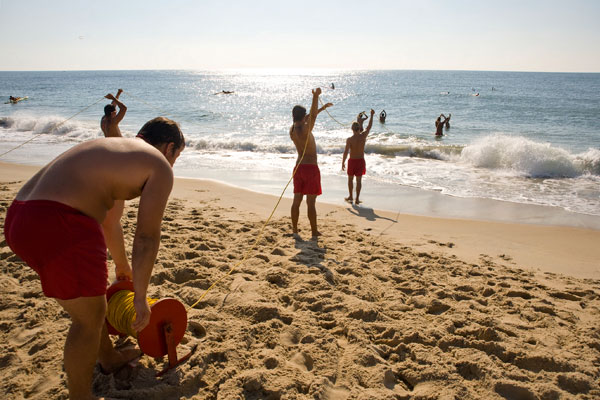
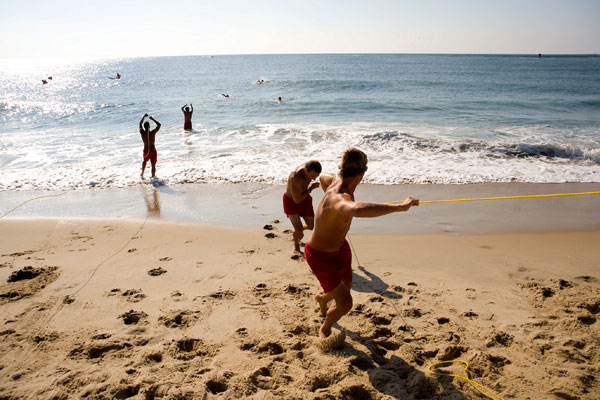
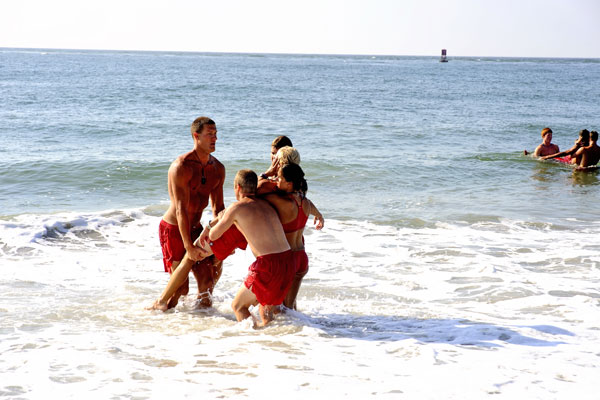
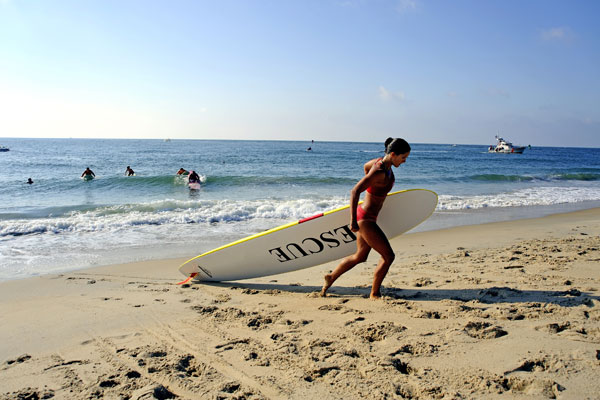
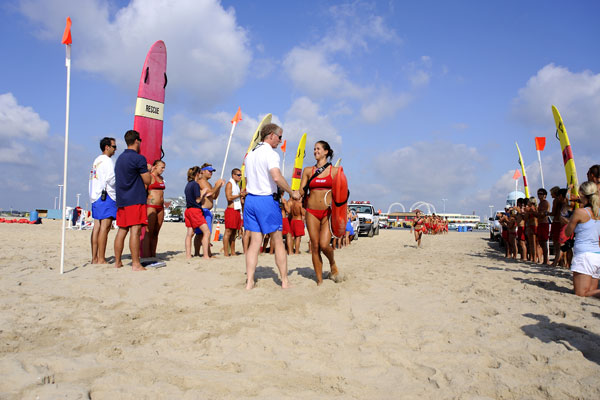
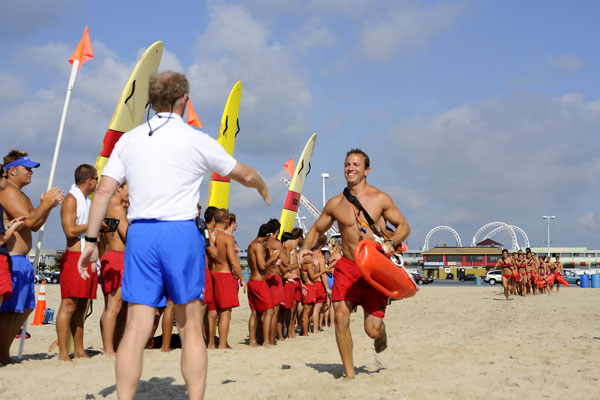
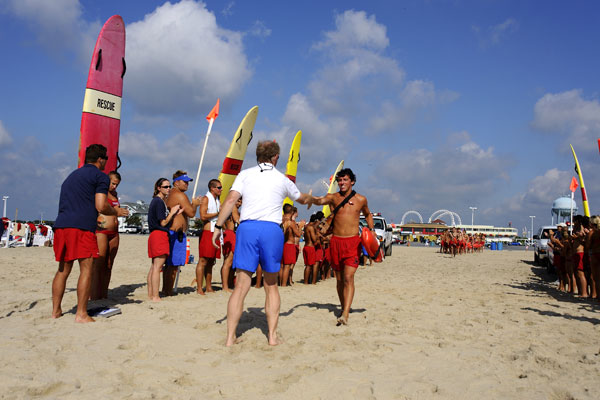
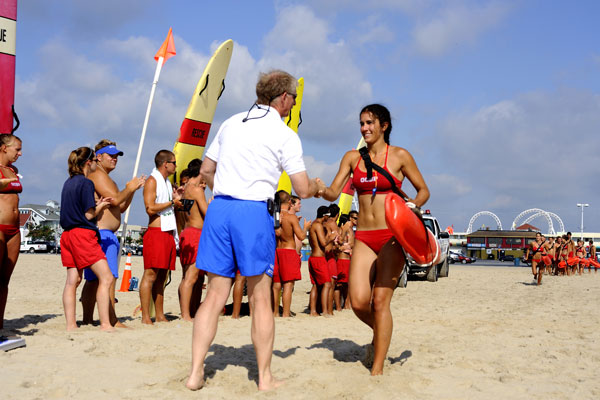
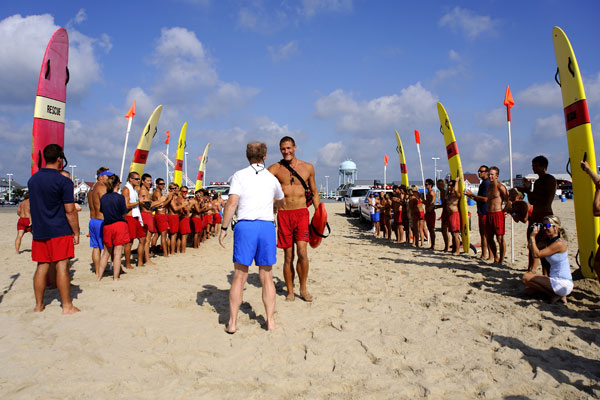
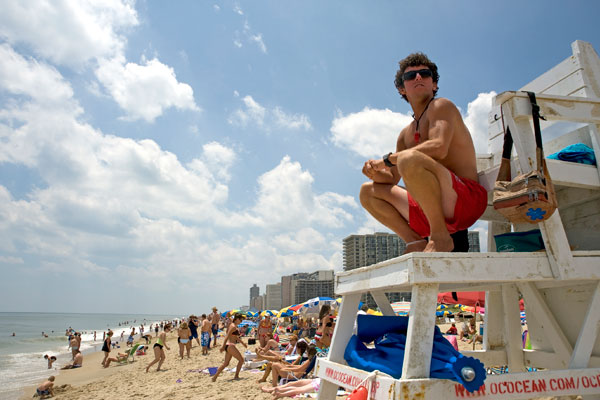
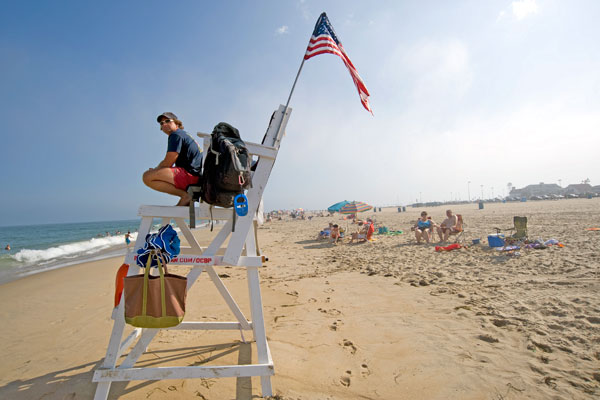
Roll call. The rookie class for the summer of 2009 numbers 35, all of whom had to pass entrance exams that included:- running 300 meters through soft sand- swimming 400 meters through ocean waves- running, swimming, running again, all against a clock- performing a series of simulated rescues - hauling a 300-pound tower chair across 20 meters of soft sand Those feats, along with passing a personal interview, got them into the Surf Rescue Academy. Michael W. FinchamCaptain Butch Arbin gives last-minute orders for these lifeguard games, a series of competitive exercises he and his staff have designed for this year's rookie class. Arbin was a rookie with the patrol 37 years ago. For the last 12 years he has been its commander in chief. Michael W. FinchamThis is how lifeguards perform most of their rescues: by racing and swimming out with a small rescue buoy. They will not usually grab a panicked swimmer, but toss him a tethered buoy that will help him float and rest until the lifeguard can begin towing him towards shore. Michael W. FinchamA veteran teaches techniques for using a surfer-style paddle board. Many of the veterans work in the school systems as teachers and guidance counselors during the off-season, leaving their summers open for lifeguarding. The rookies in this class are getting ready to compete as a team in several rescue events. Michael W. FinchamA second team watches and rests, waiting its turn in the ocean. Michael W. FinchamA veteran instructs Billy DePaola, a rookie and a new graduate of Stevenson University where he played lacrosse and soccer. Michael W. FinchamThe rookie heads for the ocean. Michael W. FinchamDePaola racing with his paddle board. The handles on the board not only help a lifeguard carry the board, they also give struggling swimmers a gripping place where they can grab hold, rest, and climb aboard. Michael W. FinchamA lifeguard paddles in the ocean, searching for swimmers in trouble. Michael W. FinchamA team of lifeguards breaks out of the starting gate, racing against the clock and against other teams. Michael W. FinchamHeaded for the surf. Paddle boards are one of the fastest ways to reach swimmers who have been swept into deep water by a rip currents. Michael W. FinchamAnother team takes off. Michael W. FinchamHeaded into the surf, lifeguards often look for rip currents that can carry them quickly past the surf zone. Michael W. FinchamThe first key to a rescue is speed, reaching a swimmer before he or she goes under. With a paddle board, a lifeguard can help a swimmer get out of the water and calm his or her panic. Michael W. FinchamAnother technique, less widely used, is a landline or rescue reel. A lifeguard carries a line out to an exhausted, panicked swimmer. Michael W. FinchamLifeguards along the beach begin hauling on the landline, pulling a swimmer in, like reeling a fish in from the sea. With landlines, lifeguards can pull swimmers in against strong, outflowing rip currents. Michael W. FinchamLifeguards at Ocean City are also trained to work with body surfers who suffer dangerous neck injuries. Michael W. FinchamWith potential neck injuries lifeguards focus on keeping the neck as straight as possible to protect against damage to the spinal cord. Michael W. FinchamAs the games end, rookies head for the shore with their paddle boards. Michael W. FinchamCaptain Arbin gets his lifeguards lined up for graduation. Michael W. FinchamFor lifeguard graduation, the veterans form two lines with boards and flags, and the rookies run the gauntlet. Michael W. FinchamAs veterans applaud, each rookie is congratulated by Captain Arbin. Michael W. FinchamRookie Billy DePaola graduates as a certified Surf Rescue Technician. Michael W. FinchamIn 1977, the Ocean City Beach Patrol hired its first female lifeguard. This year six women participated in the rookie class, bringing the total number of women on the beach patrol to 37. Michael W. FinchamCaptain Butch Arbin, who joined the patrol in 1972, congratulates his son, Michael Arbin, who joined in 2009. Michael W. FinchamThe games are over and new grad Billy DePaola goes back to work on his chair tower near the north end of the beach, scanning the ocean for swimmers in trouble. Michael W. FinchamAnd veteran Ben Davis, now in his ninth season, works as crew chief for lifeguards along the south end of the beach. Michael W. FinchamThe Ocean City Beach Patrol began in 1930 with one lifeguard watching over several blocks of swimming beach. With this rookie graduation, the beach patrol now numbers nearly 200 lifeguards watching over 10.5 miles of public beach. Michael W. Fincham
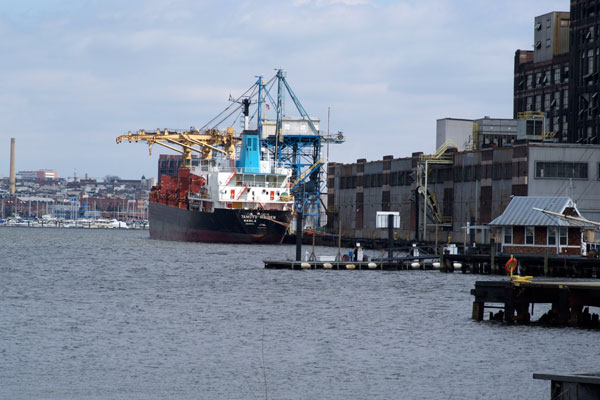
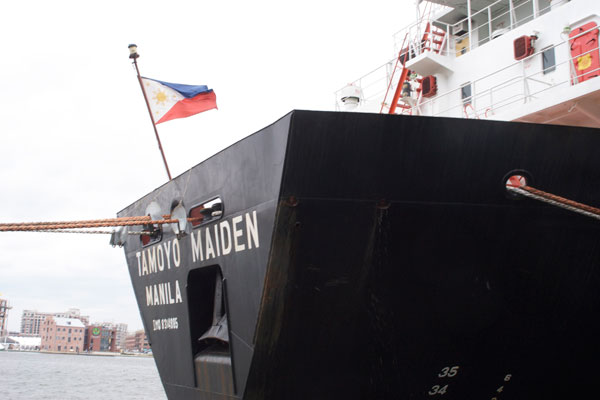
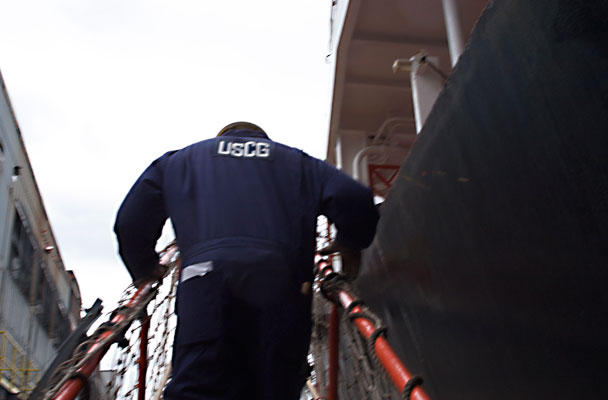
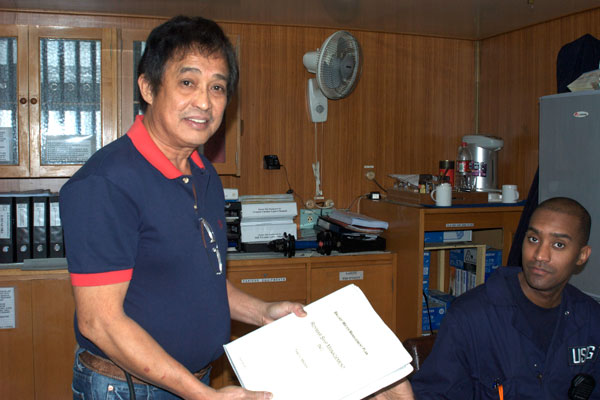
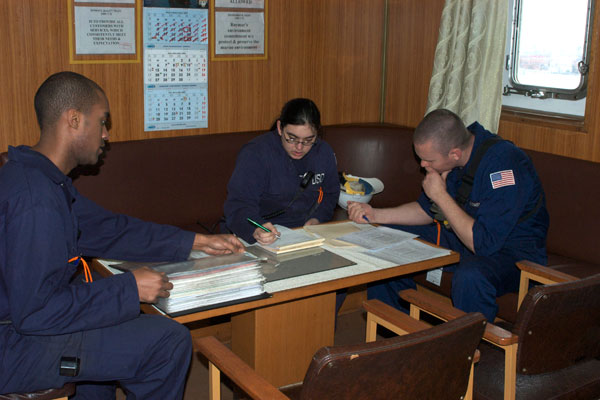
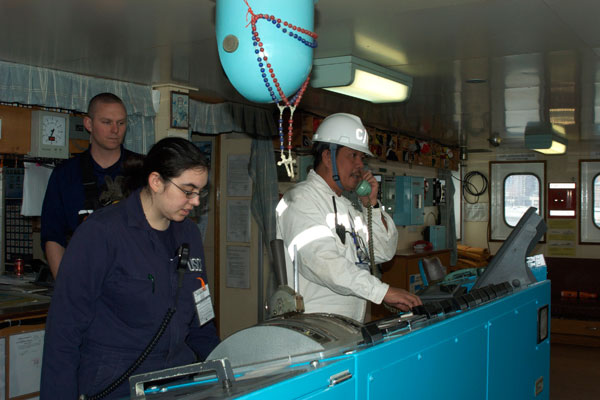
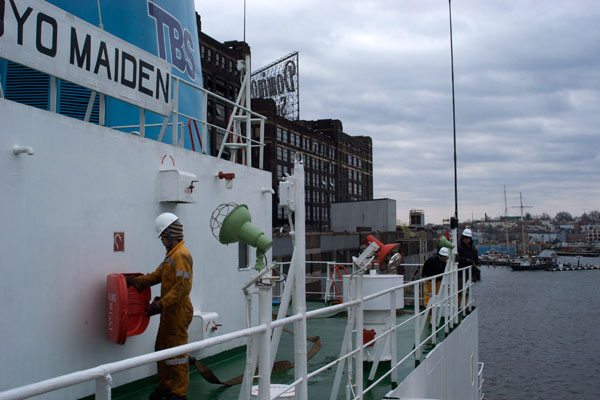
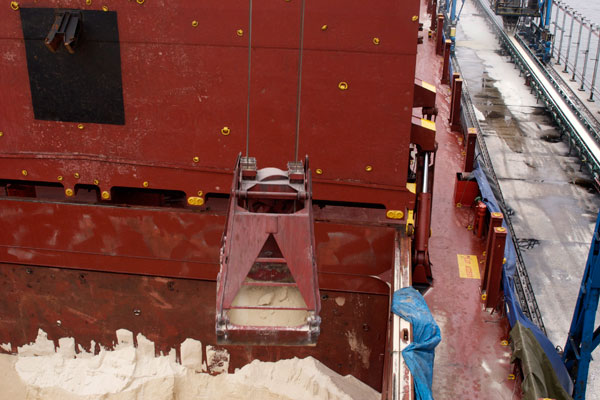
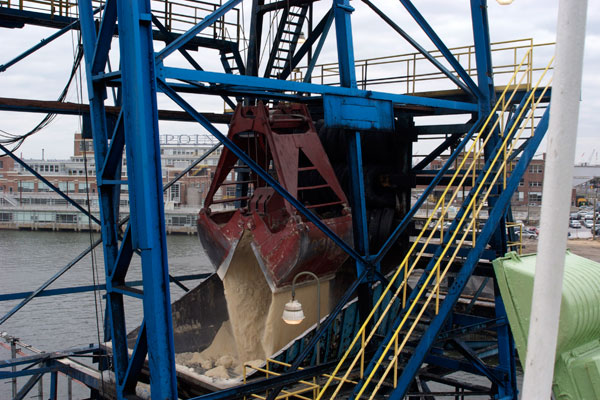
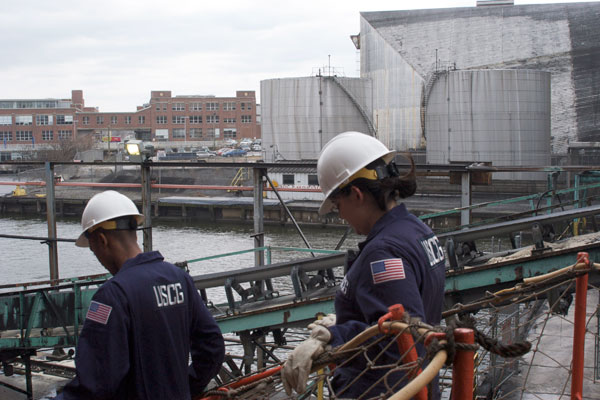
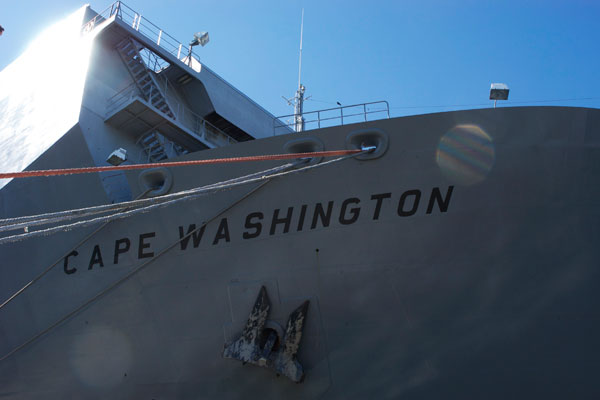
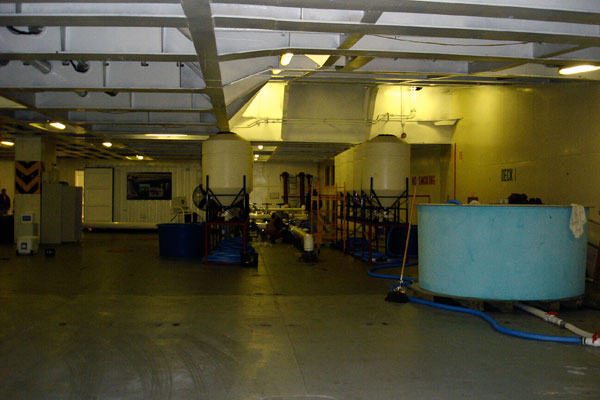
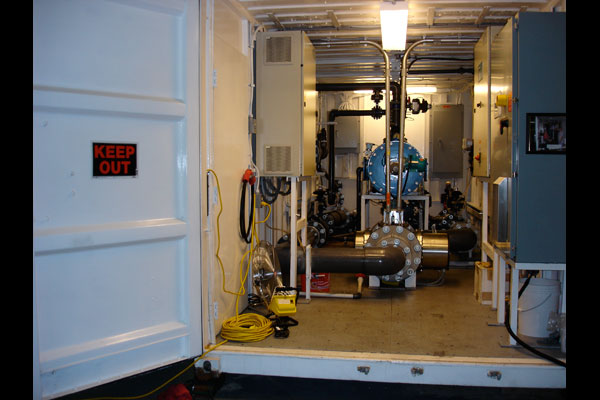
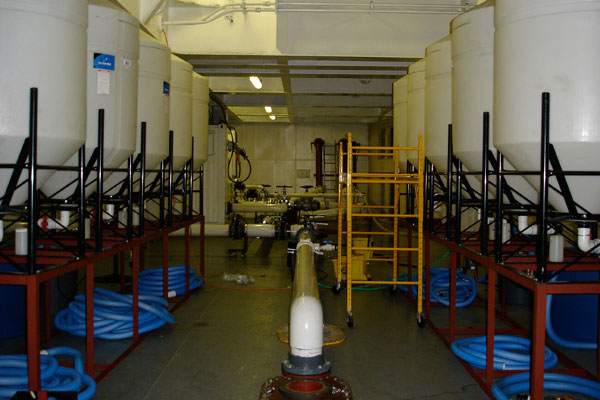
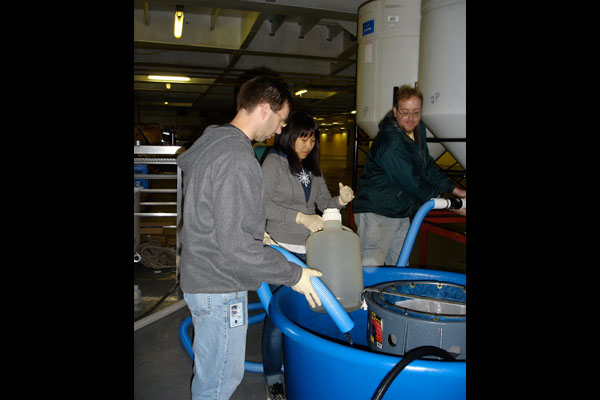
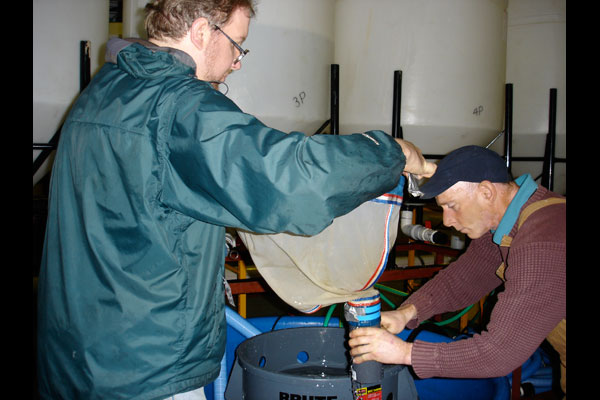
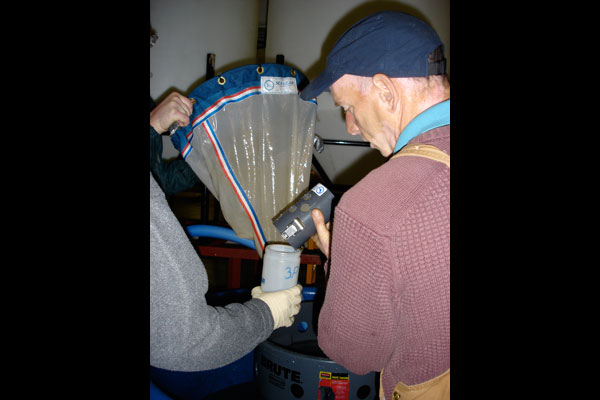
At night, the Domino Sugar sign lights up the city skyline, announcing its presence as a Baltimore icon. During the day, it marks the spot of a busy waterfront refinery. Jessica SmitsAfter three weeks of waiting at the Annapolis anchorage due to a backup at the Domino refinery, the Tamoyo Maiden finally offloads its cargo: 15,000 metric tons of Mexican sugar. Jessica SmitsFlying the flag of the Philippines, the Tamoyo Maiden has been at sea for several months, traveling with goods � and ballast water � from around the world. Jessica SmitsEnsign Jerome Brown climbs the sticky steps to the main deck of the ship. The U.S. Coast Guard inspects foreign ships as part of its Port State Control procedures. Today is the Tamoyo Maiden's turn. Ensign Brown and his team have come unannounced. Jessica SmitsCaptain Victorino Escoto accommodates the Coast Guard's request to see several binders of documentation. Among them is the ballast water management plan � a record of when and where the ship has taken on and discharged ballast water. Jessica SmitsEnsign Brown, Marine Science Technician (MST3) Kristina Flores, and LTJG Max Murray pour over reams of documents, from crew lists to maintenance records. Jessica SmitsThe Coast Guard inspectors ask Chief Mate Lardizabal to demonstrate the ship's steering. Jessica SmitsCrewmembers take part in a number of drills as part of the inspection, including a fire drill and a man overboard drill. Jessica SmitsWhile the ship's crew tends to their visitors from the Coast Guard, huge cranes unload sugar from the cargo ship's holds. Jessica SmitsMechanical claws dump the raw sugar onto a conveyor belt. Jessica SmitsThe conveyor belt heads into the gritty Domino Sugar refinery, a Baltimore institution since 1921. Jessica SmitsThe Coast Guard inspectors depart the Tamoyo Maiden pleased with the ship's condition and the captain and crew's preparedness. They found no major issues and praised Captain Escoto for his diligence. Jessica SmitsBack from delivering equipment to Iraq, the Maritime Administration's M/V Cape Washington is now serving a different kind of mission � as a test facility of the Maritime Environmental Resource Center (MERC). MERC formed in 2008 to tackle environmental issues facing the shipping industry. Its first order of business: testing ballast water treatment systems. Jessica SmitsTucked deep within the ship, pipes and laboratory equipment have replaced humvees and helicopters. MERC has set up shop here to test ballast water treatment systems. Jessica SmitsInside a larger trailer-like container sits today's treatment system of interest � an apparatus that will filter ballast water and then zap it with UV light. MERC will test the system's effectiveness at removing living organisms. Jessica SmitsBallast water runs through an obstacle course of piping along the ship's back wall. Untreated water runs into the starboard ballast tank. MERC engineers also route ballast water through the treatment system and into the portside tank. Biologists then fill up the conical jugs to sample water conditions. The jugs on the left will contain untreated water while the jugs on the right will contain water that's run through the filter and UV rays. Jessica SmitsThe biologists transfer treated water from a large conical jug to a smaller jug. From there, they dispense samples into even smaller bottles that will be brought back to labs at University of Maryland and analyzed for things like dissolved oxygen, chlorophyll content, acidity, salinity, and the presence of bacteria. Jessica SmitsTim Mullady (left) and George Smith (right) concentrate the water sample using a plankton net. Both are biologists at the Smithsonian Environmental Research Center. Jessica SmitsThe tea-colored precipitate will be studied under a microscope to count the number and types of plankton present in the water. All of the analyses are done for both treated and untreated water to gain insight into how well the treatment system removed potential invasive species from the ballast water. Jessica Smits
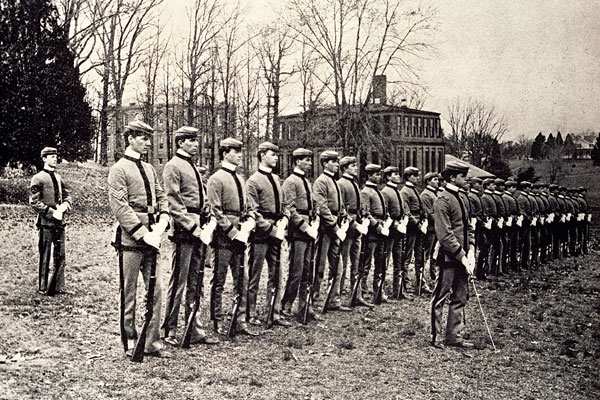
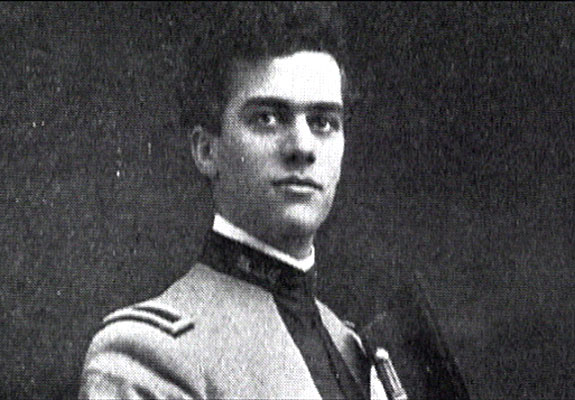
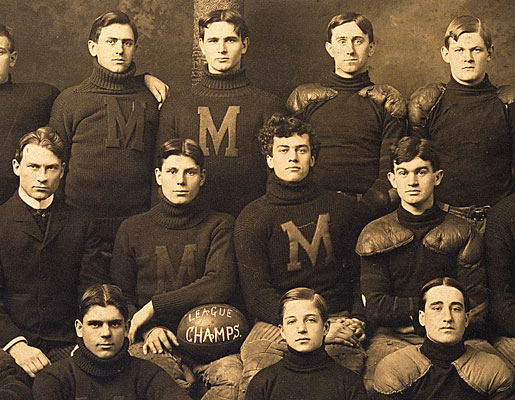
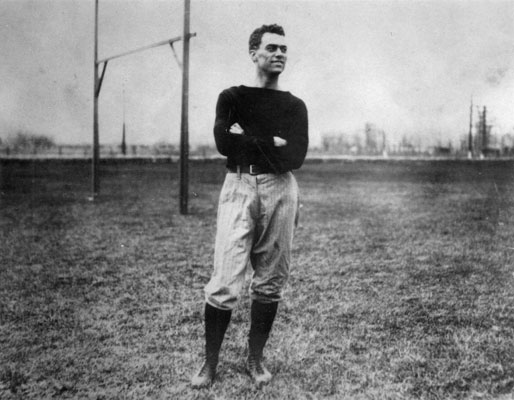
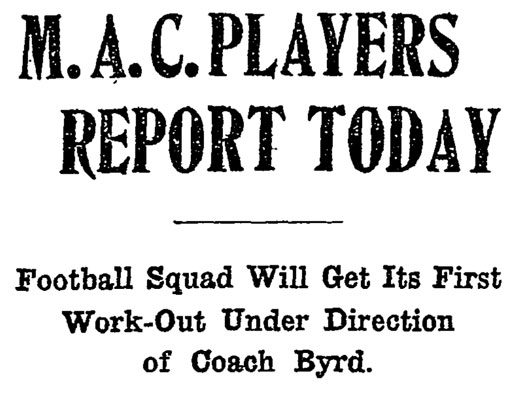
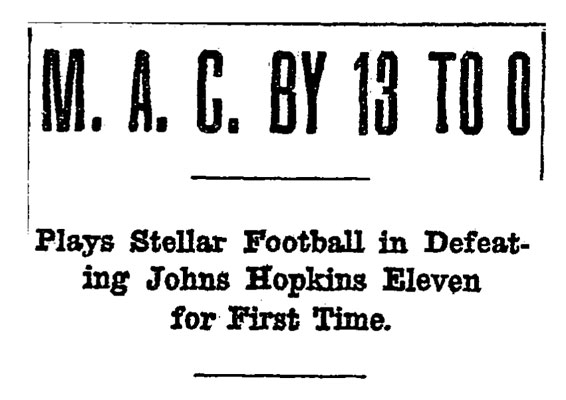
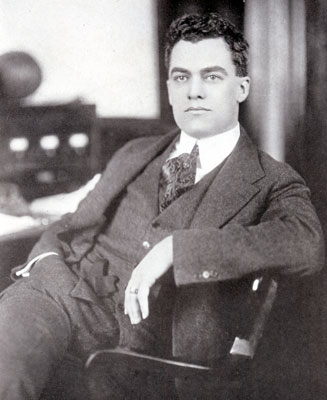
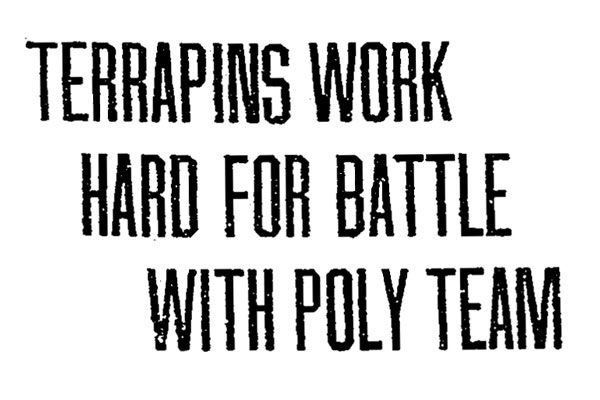
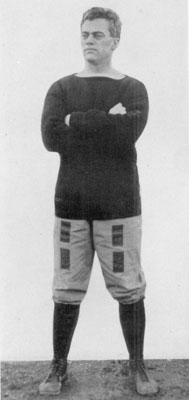
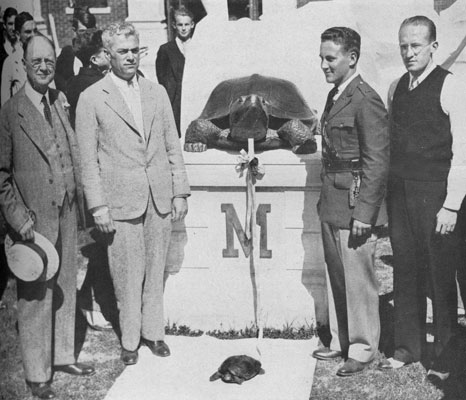
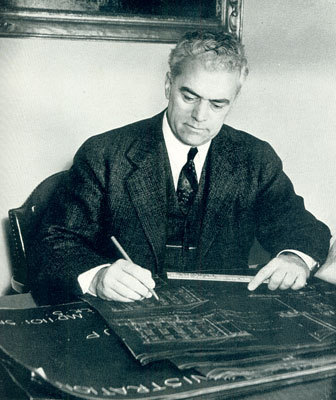
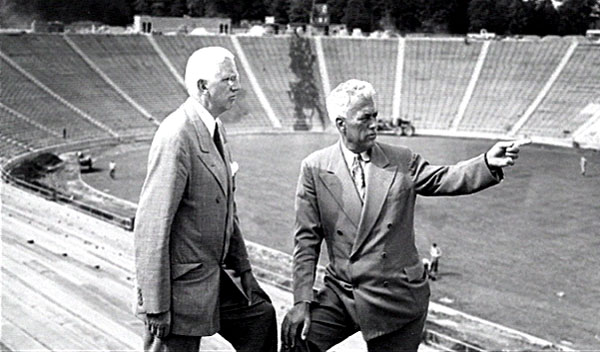
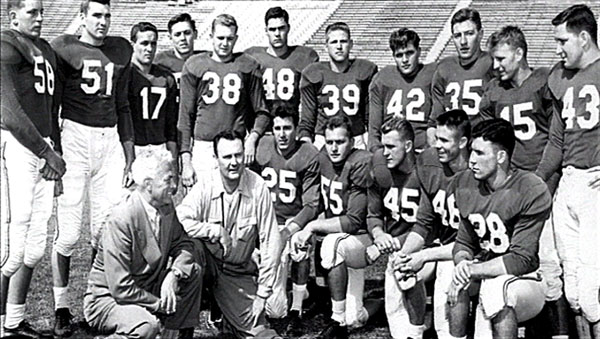
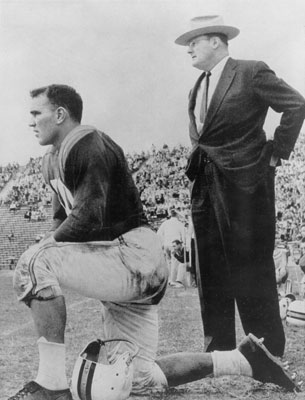
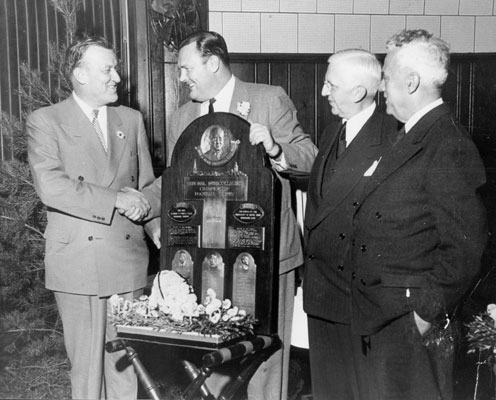
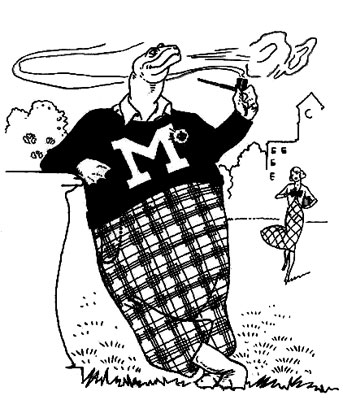
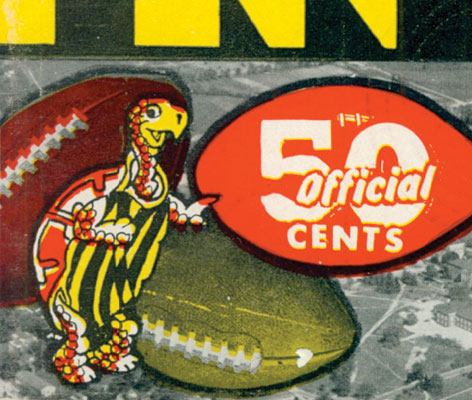
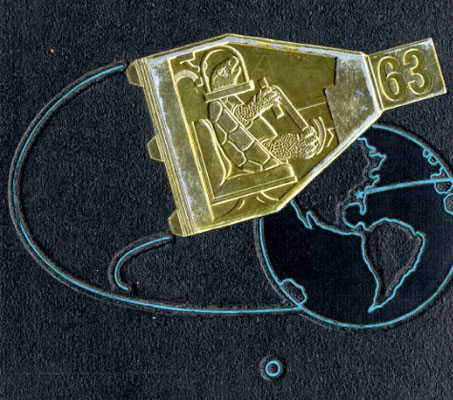
The Maryland Agricultural College was a tiny school on a hill in 1905 when Harry Clifton Byrd arrived. The hill held less than 10 buildings and enrolled fewer than 100 students. University of Maryland ArchivesThe ag and engineering school was also a military school, largely because it became the Land Grant College for the state during the Civil War and was required to offer "military studies" as one of its options. University of Maryland ArchivesAs a cadet Harry Clifton Byrd was called "Curley," by his classmates for obvious reasons. The name would stick with him for the rest of his life. The son of an oysterman, Byrd studied Civil Engineering, won a prize for debate and graduated in three years. University of Maryland ArchivesCurley Byrd was small, less than 150 pounds when he arrived on campus. But he was fast and became a star in football where he played end and quarterback, in baseball where he was the starting pitcher, and in track where he set sprint records. Although primarily a running quarterback, he was one of the first to throw forward passes. University of Maryland ArchivesAfter graduating in 1908, Byrd went on to post-graduate athletics, playing football again, first at George Washington University and then at Georgetown University. As the newspaper notes, he was considered "the greatest quarterback in the South." His tuition at Georgetown was paid by a well-off alumnus. Washington PostYoung Curley Byrd briefly coached high school football in Washington D.C. where he quickly established a reputation as an exceptional coach. In 1912, he returned to his alma mater as head football coach. University of Maryland ArchivesBecause of his fame as a player, Byrd began his college coaching career with considerable press coverage. Washington PostWhen the Maryland Agricultural College first fielded a football team in 1892, they lost to Johns Hopkins by 62 to 0, beginning a tradition of futility that would last 20 years. When Byrd's first team finally beat the school's greatest rival, the game began a new tradition. College Park under Byrd teams would lose only once to Hopkins over the next 15 years. Hopkins eventually discontinued the series and dropped intercollegiate football. Washington PostAn End and a Beginning. During the Thanksgiving Dance of 1912, the Old Barracks and the Administration Building, the two largest buildings on campus, caught fire and burned to the ground. The disaster did not close down the school, but it kicked off a rethinking by the state legislature that led to the creation in 1920 of a University of Maryland. The home campus would be located in College Park and the professional schools (Law, Medicine, Nursing) would remain in Baltimore. University of Maryland ArchivesThe school at College Park was more than an ag college now; but the teams from the state university were still called "The Farmers," or "The Aggies." Other names that popped up in the sports pages included: "The Southerners," "The Old Liners," or "The Black and Gold." In 1924 Curley Byrd began calling his teams "The Terrapins," a name that called up his own memories of his childhood in Crisfield and linked the new university with a popular species native to the rivers and shallows and shores of the Chesapeake Bay. University of Maryland ArchivesThis headline from 1924 is one of the first to call Maryland teams the "Terrapins." The school had no official mascot yet and newspapers for several years also kept calling the teams "The Old Liners," or "The College Parkers," or "The Southerners." Washington PostCurley Byrd quickly became more than a football coach, serving also as Athletic Director and special assistant to the president. His strategy for building the fame of the school: build winning sports teams that would inspire the love and loyalty of fans and alumni around the state. University of Maryland ArchivesIn 1932 the University at the prodding of the school newspaper, The Diamondback, made the terrapin the official school mascot. The senior class of 1933 raised money for a statue. Called "Testudo," the statue was modeled on the live terrapin (seen crawling on the ground) that was shipped up from Crisfield, Curley Byrd's home town. University of Maryland ArchivesThe coach becomes king of the campus. In 1935, in the middle of the Great Depression, Curley Byrd was appointed President of the University of Maryland. He would serve for 19 years and become famous for raising money for new buildings and closely supervising their architecture. He committed the campus to the Georgian style of red brick buildings with white columns and cupolas. Older buildings that didn't fit were restyled or torn down. University of Maryland ArchivesByrd's Monument. Curley Byrd shows off the new football stadium to William Cole, the alumnus who served as Chairman of the Board of Regents. The new stadium, called Byrd Stadium, was replacing the old football stadium, also called Byrd Stadium. The new basketball arena would be named Cole Fieldhouse. Sports facilities like these and the new Student Union were funded in part by fees collected for veterans under the G.I. Bill. University of Maryland ArchivesThe Terrapins go big time. After World War II, Byrd hired a number of excellent football coaches, including Jim Tatum shown here. His goal: winning a national championship for the Maryland Terrapins University of Maryland ArchivesJim Tatum took the Terrapins to big-time bowl games like the Sugar Bowl, the Gator Bowl and the Orange Bowl. His 1953 team won the national championship. University of Maryland ArchivesCurley Byrd's last hurrah. In 1953 Curley Byrd (far right) resigned to run for governor, but before he left his Maryland terrapins led by Coach Jim Tatum (center) won the national championship in college football. Here Tatum in 1954 accepts congratulations for the championship award from Governor Theodore McKeldin, (far left) the man who would defeat Curley Byrd that year in the race for governor. University of Maryland ArchivesAs mascot for the University of Maryland the terrapin would wear a lot of odd clothes and smoke a few pipes over the decades. Here's a terp as a dude, circa 1934. University of Maryland ArchivesFor decades the terrapin popped up as a comic character trying to keep pace with the times. This 1953 terrapin stands among footballs for good reason: that year the football team went undefeated during the regular season and was voted national champion. University of Maryland ArchivesThe comic tradition continued with this 1963 yearbook cover showing Testudo heading into orbit in a small space capsule. Terps were again keeping pace with the times. In 1962, Lieutenant Colonel John Glenn, Jr had become the first American to orbit the earth in a small Mercury capsule. University of Maryland ArchivesThis 1964 terp looks ready for something �- if not a football game, then perhaps a pre-game tailgate party. University of Maryland ArchivesAnother terrapin for the times: the terrapin goes psychedelic for the 1977 yearbook. University of Maryland ArchivesThe late 1970s saw a shift from the comic to the combative. This 1978 terrapin has his fists cocked, ready for a fight. University of Maryland Special CollectionsPumped up: By 1994, Testudo was on steroids, ready to take on all comers. This muscle-bound terrapin has had a long run as the iconic image of the school's sports teams. It became even more popular as the men's basketball team went won the national championship in 2002 and the womens team won in 2006. It came to symbolize the slogan "Fear the Turtle." University of Maryland Special CollectionsNever look back, something may be gaining on you. Another version of the angry, muscular terrapin appeared in 2001, the year the basketball team made it to The Final Four before losing to Duke. University of Maryland Special Collections"Fear the Turtle" began life as a sports slogan first popularized by a fan, then printed on T shirts, then finally in 2003 launched as the theme of a national marketing campaign, designed to publicize the many academic and research achievements of the University of Maryland. The campaign turned away from cartoon terrapins to create dramatic, yet realistic versions of a handsome, charismatic, full-colored terrapin that could do more than walk and talk: it could lift its head � and roar. It showed Marylanders what real terrapins look like and helped save this native species from commercial exploitation. University of Maryland
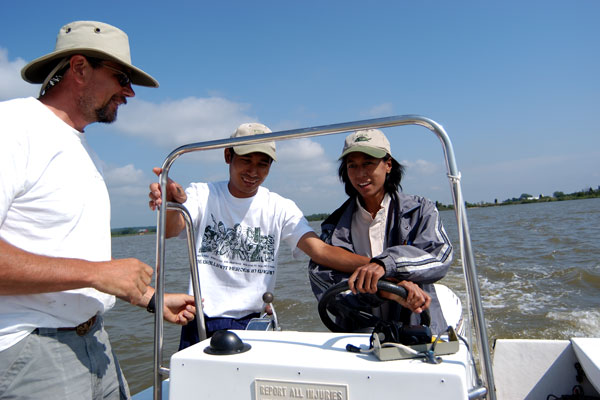
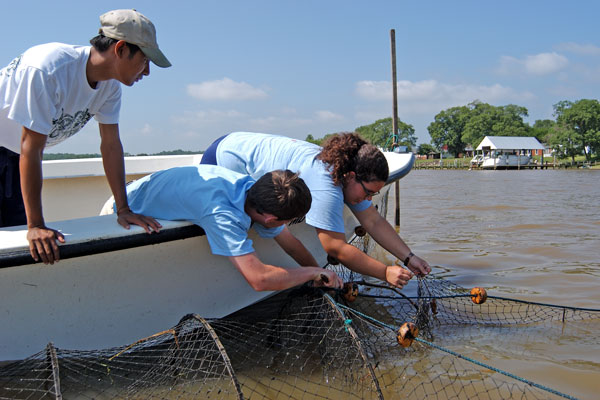
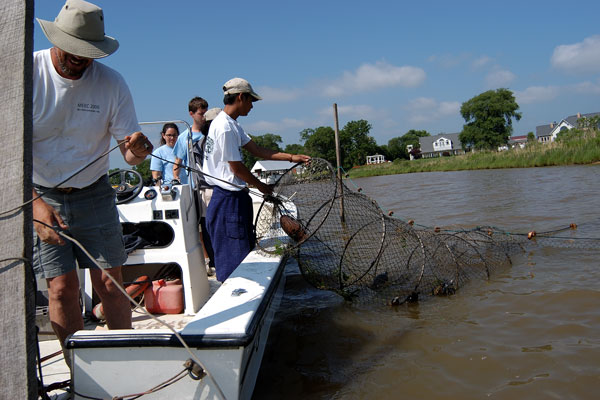
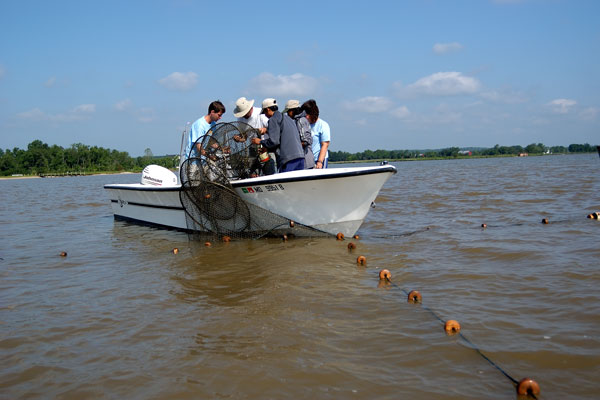
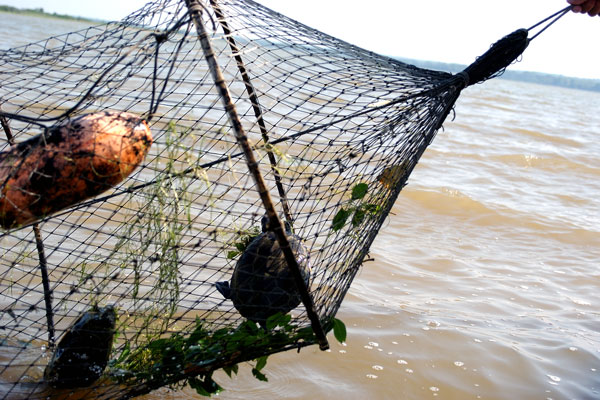
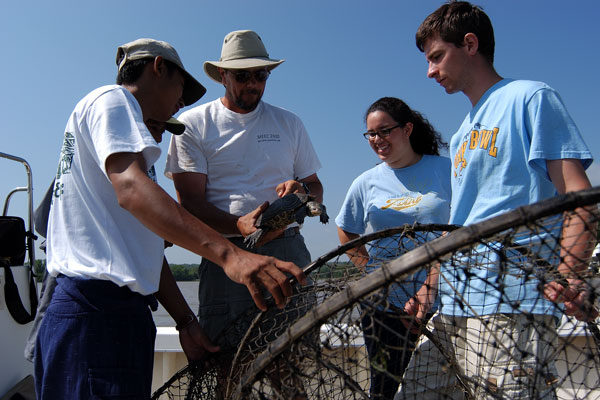
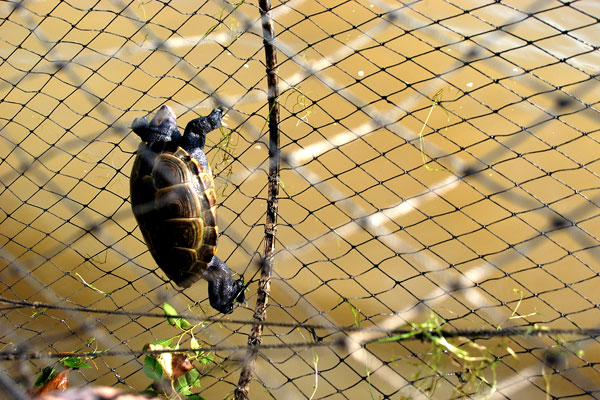
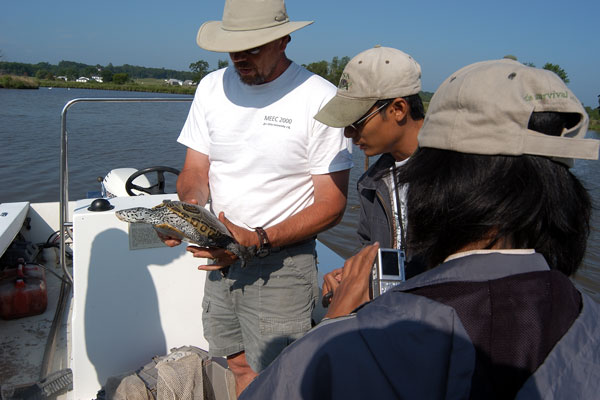
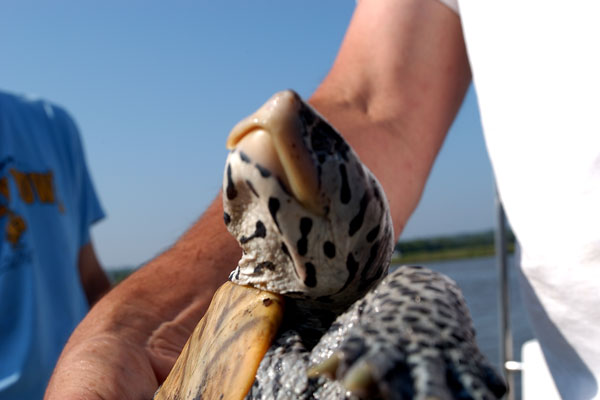
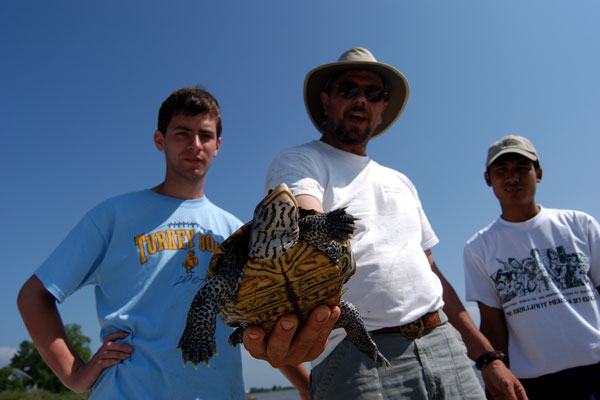
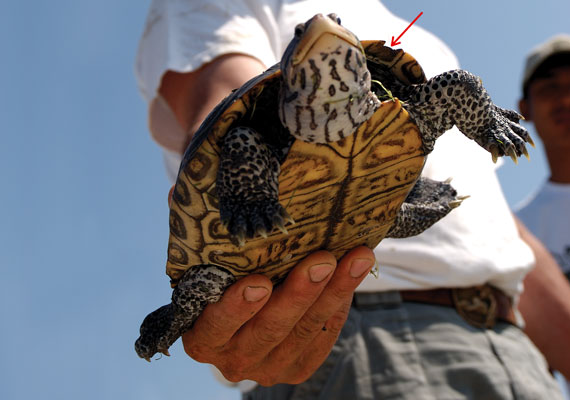
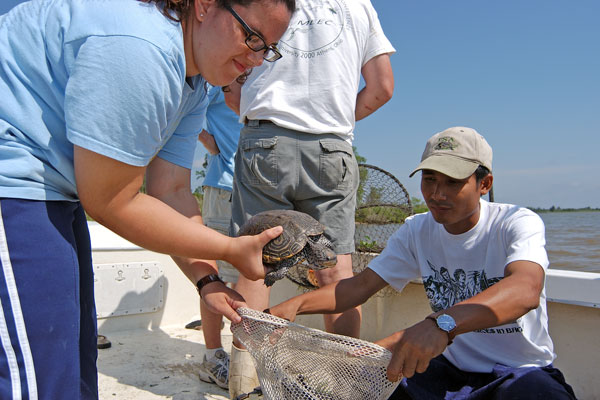
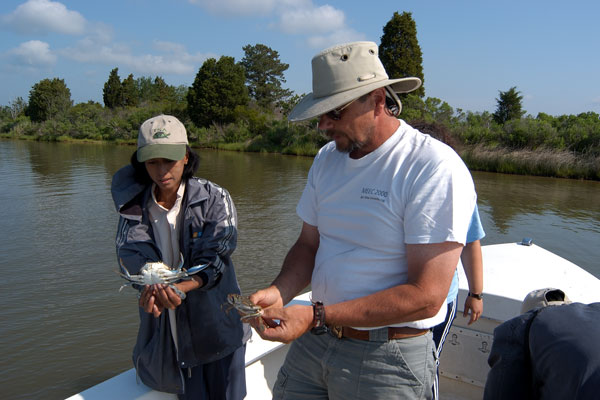
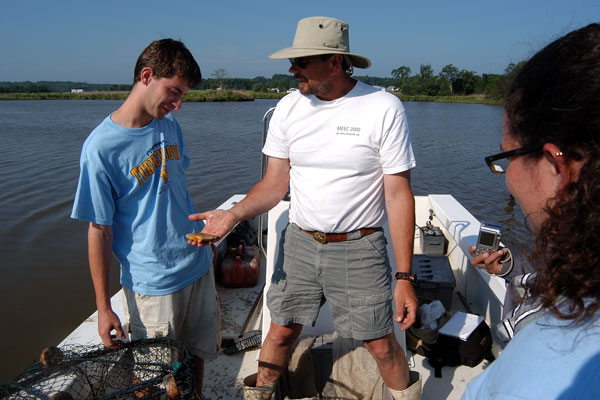
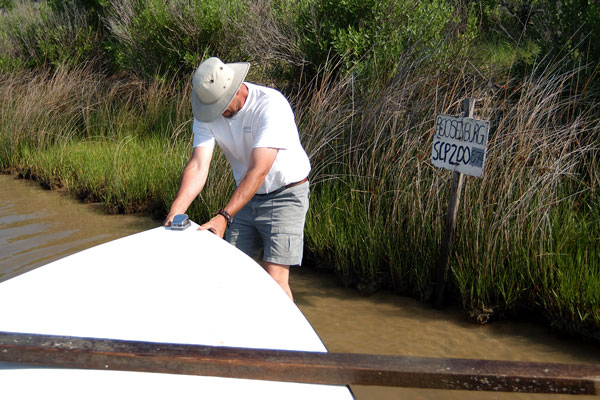
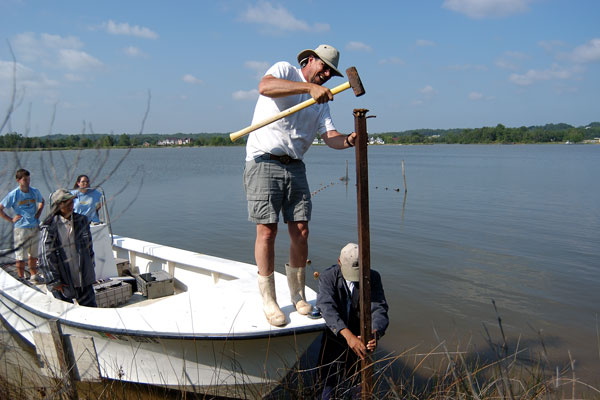
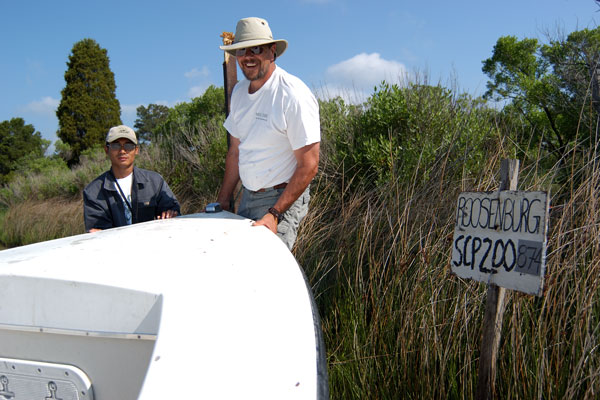
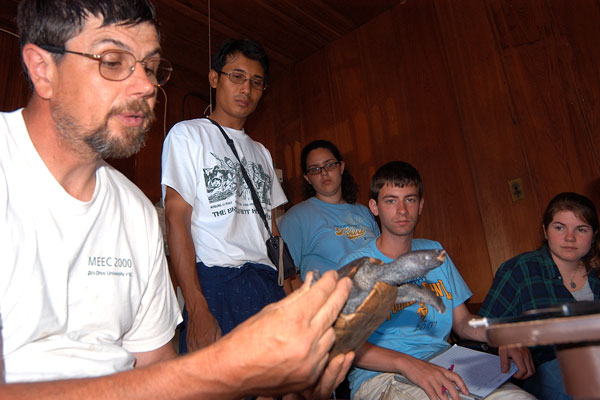
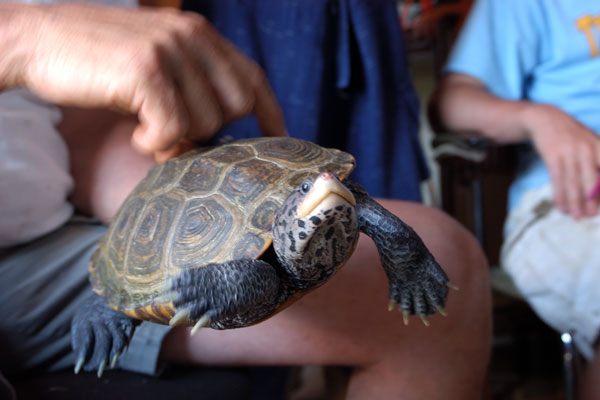
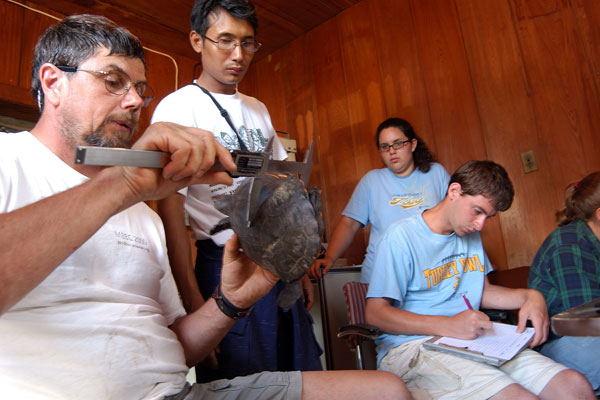
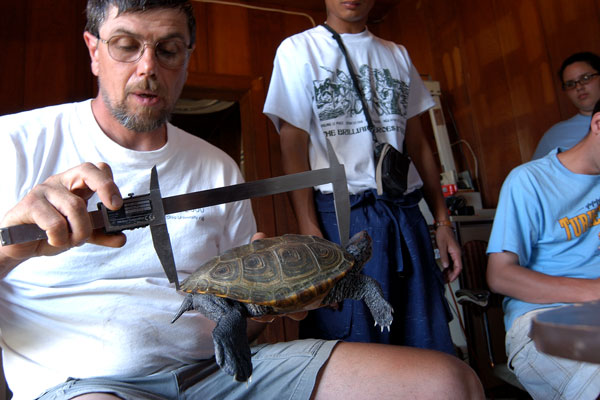
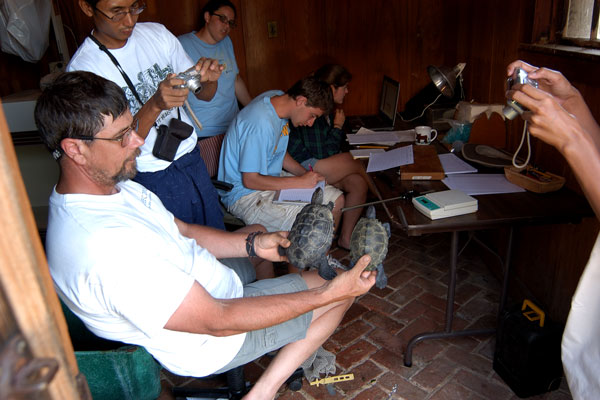
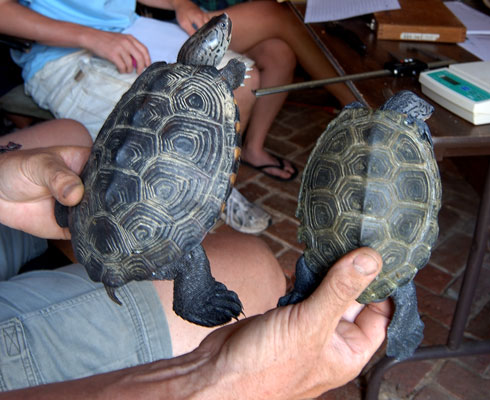
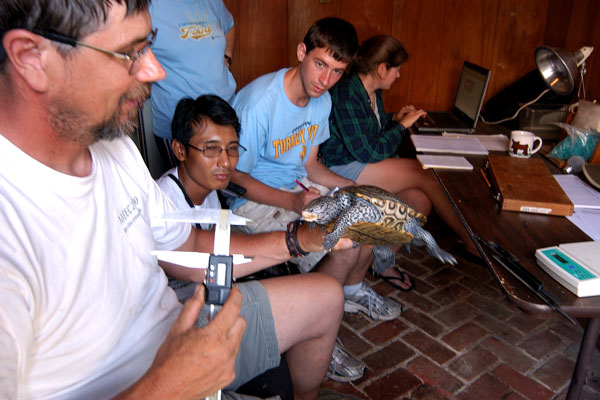
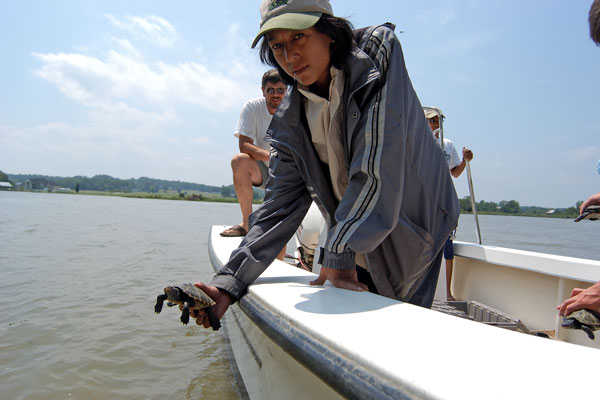
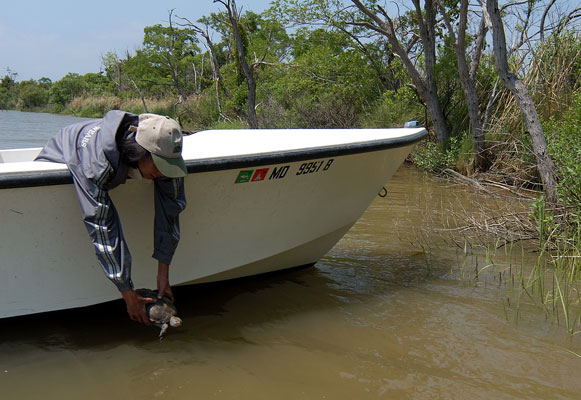
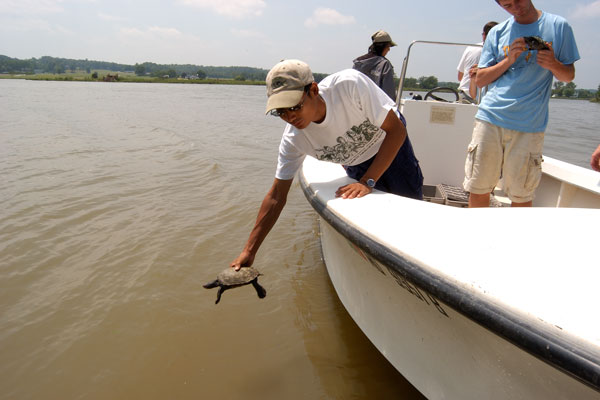
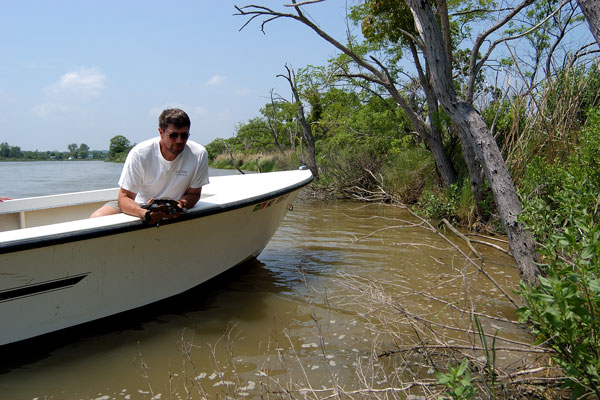
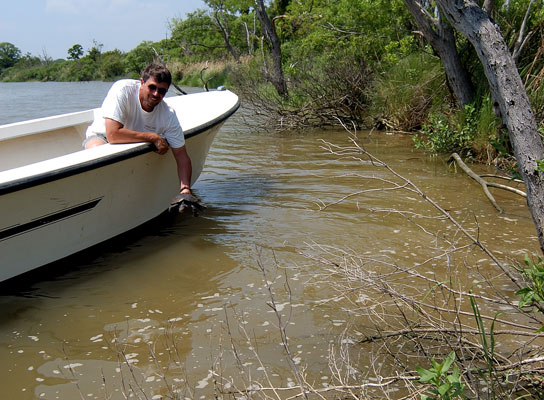
On the first day of the summer sampling season, Roosenburg and crew head out along one of the creeks along the Patuxent River to check fyke nets for diamondback terrapins. Michael W. FinchamKyaw Moe and Khin Myo Myo learn a little boat driving. These field biologists, newly arrived from Myanmar, work for the Wildlife Conservation Society and were sent here by the Turtle Survival Alliance, an organization working to preserve endangered species like the Burmese roofed turtle. Michael W. FinchamKyaw Moe begins learning about fyke nets as Tom Parker and Margaret Lilly pull in a net. Michael W. FinchamRoosenburg ties up to a stake as Moe and the others begin hauling up a fyke net. Along the shore are some of the new houses and lawns that stand on old nesting sites for diamondback turtles. Michael W. FinchamThe crew pulls the fyke net on board. In the foreground can be seen the leader net and the two wings that guide terrapins and fish into the fyke net. Michael W. FinchamAs the net rises out of the water, terrapins try to climb out of the net. Michael W. FinchamFirst out of the net is a female. It�s a fact of terrapin life, the biologist explains, that females are much larger than males. Michael W. FinchamA diamondback climbs steadily upwards Michael W. FinchamThe biologist introduces the Maryland terrapin to the Myanmarese biologists. Michael W. FinchamA terrapin eyes a biologist. Michael W. FinchamThe biologist and the object of his research. Michael W. FinchamRoosenburg has caught this lady terrapin before. He can tell by the notch (marked by red arrow) in the shell. Notches like this give each nameless terrapin a number. A number like 2L-5L-11L-4R-8R, for example, means a terrapin has notches at the 2nd, 5th, and 11th scute along the left side of her carapace (top shell) and at the 4th and 8th scute along the right side. As that ID appears and reappears in his database, the biologist can track this terrapin�s travels and troubles through the rest of her life in the wild. Michael W. FinchamEach terrapin goes into a sampling bag numbered for the fyke net where he or she was caught. Michael W. FinchamThe biologist introduces Myo Myo to another famous Maryland species. Michael W. FinchamUndergrad student Tom Parker gets a pop quiz on fish identification. Pumpkinseed sunfish, says Roosenburg. Michael W. FinchamRoosenburg hauls his boat ashore to fix one of his fyke nets. Michael W. FinchamNets have to be tied up to stakes. Stakes have to be driven into the bottom. Michael W. FinchamPushing off. Michael W. FinchamIn his small, field lab, the biologist begins the first data-recording session of the season. Michael W. FinchamA diamondback tries to paddle home. Michael W. FinchamMeasuring body thickness, from the top of the carapace to the bottom of the plastron. Michael W. FinchamMeasuring carapace length. Michael W. FinchamPop quiz: Which is the male? Which is the female? Michael W. FinchamOn the left: the female. On the right: the male. Fully grown females are often 30 to 50 percent larger than males. Michael W. FinchamAll the numbers from measuring, weighing, sexing and aging go into a computerized data base that can tell Roosenburg how often he�s caught this particular terrapin and how fast she�s grown. Michael W. FinchamMyo Myo gets ready to release a terrapin back into the Patuxent. Michael W. FinchamLetting go. Michael W. FinchamKyaw Moe releases. Michael W. FinchamThe biologist picks out his release spot. Michael W. FinchamBon voyage �til next year. Michael W. Fincham
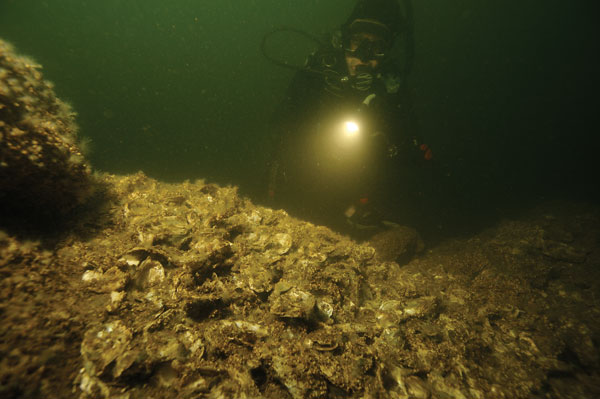
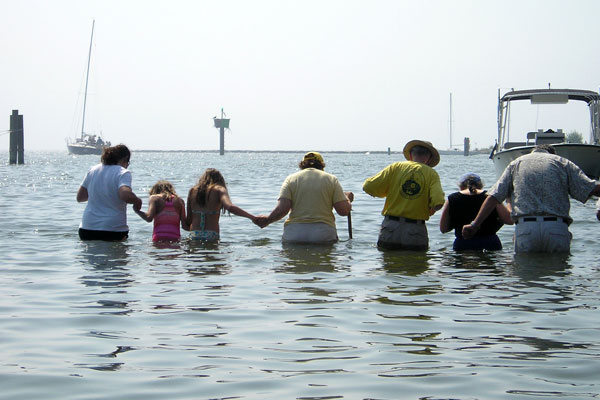
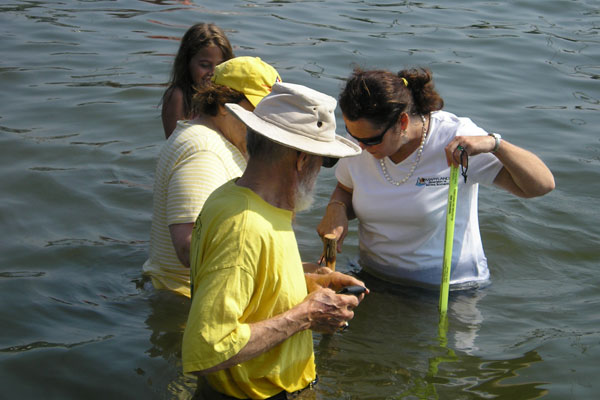
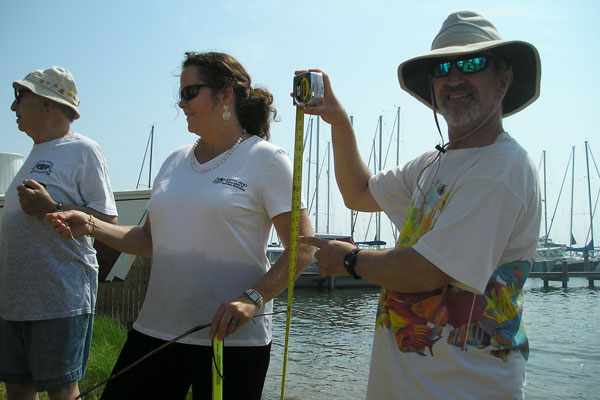
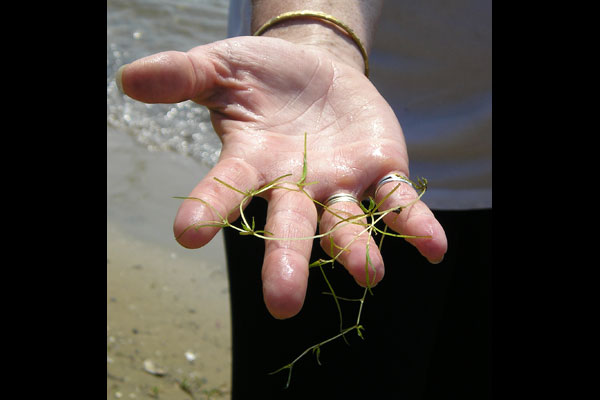
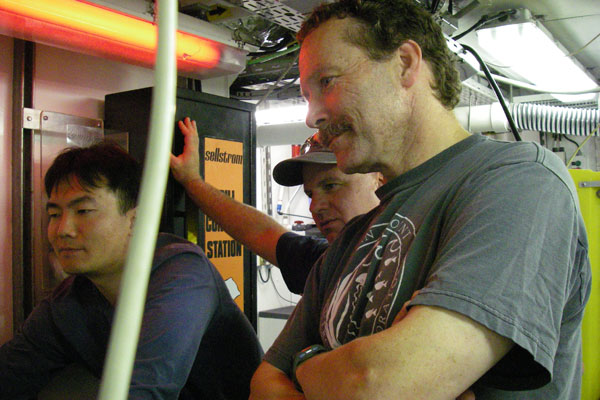
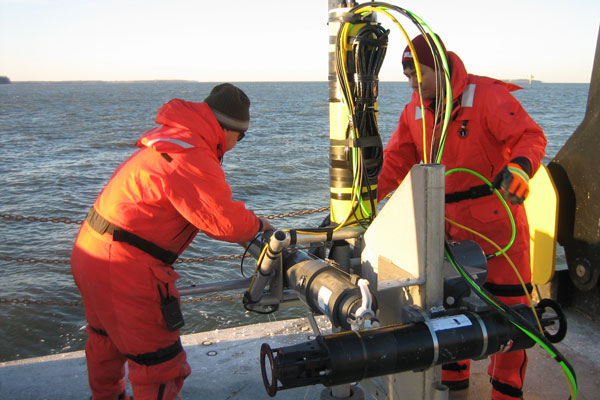
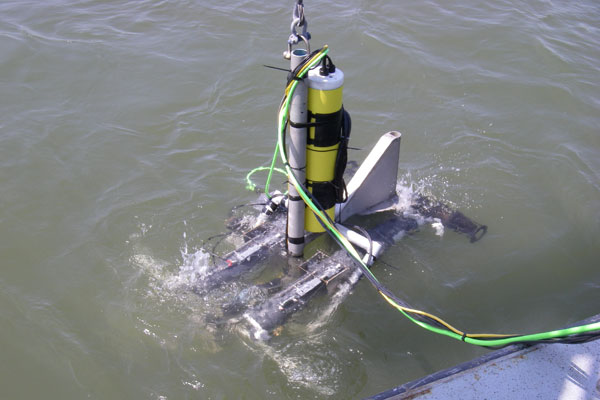
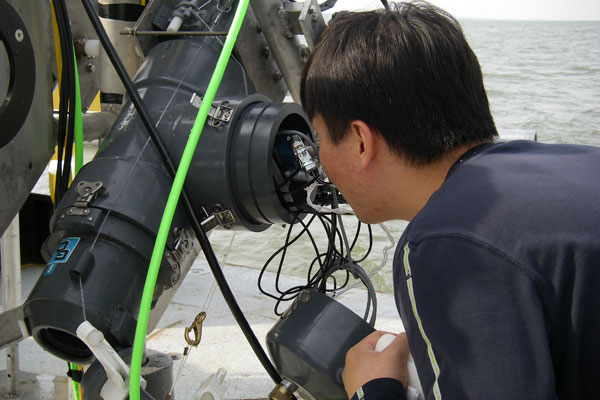
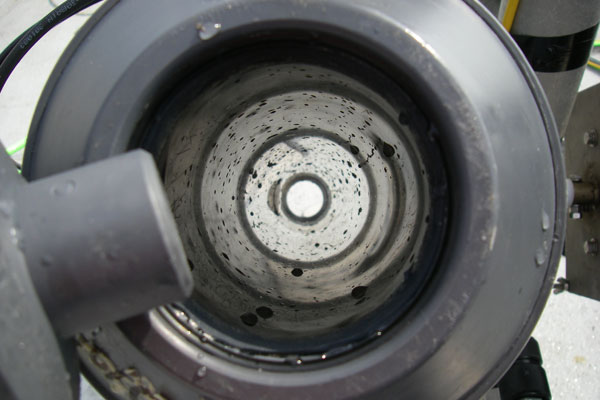
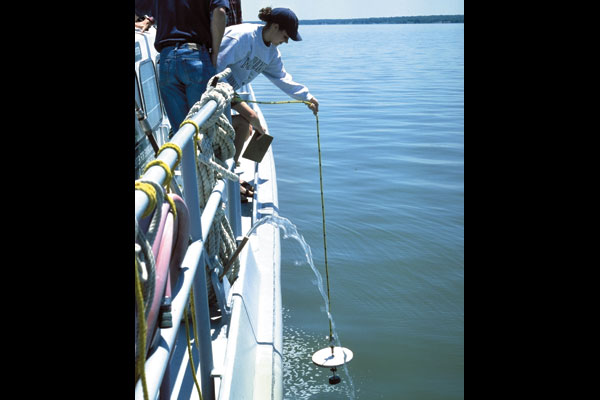
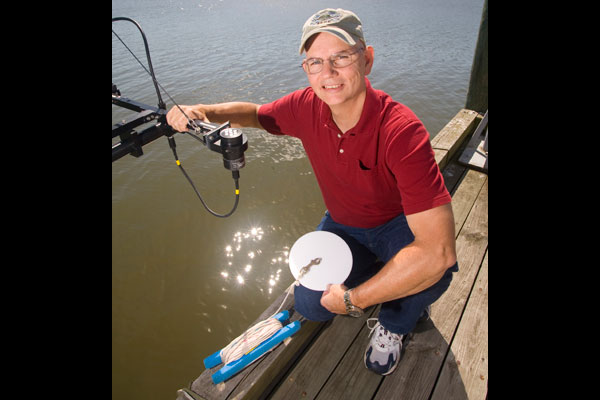
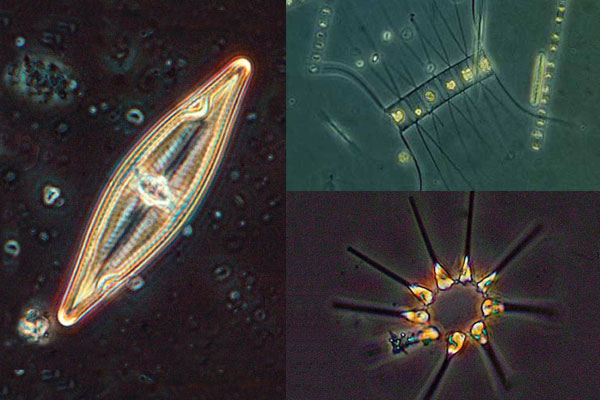
Sand and light help eelgrass grow. Too often now the bottom of the Bay is muddy and the light dim. Robert F. MurphyLight bathes an oyster bar, with a little help from professional photographers. Veteran underwater cinematographer Nick Caloyianis (pictured here, with light), carefully set up this shot of a restored oyster reef, built on rubble from the Wilson Bridge. Behind him lies the unlit gloom of the Chesapeake, which grows murkier every year. Michael Eversmier, Aqua Ventures, Inc.Annapolis mayor Ellen Moyer gathers her small band on the shores of Eastport in June 2008 for the annual wade-in. Jack GreerThe waders head into Back Creek, with the wide waters of the Chesapeake Bay before them (looking southeast). Jack GreerClaudia Donagen of the Maryland Department of Natural Resources borrows a tape measure after her meter stick proves too short for this year�s depths. Jack GreerDonagen�s wet shirt and a citizen volunteer (pointing to tape) document this year�s promising depth of 42 inches. Jack GreerA sprig of redhead grass, crisp and green, is a reminder to wade-in participants of what they�re trying to bring back. Jack GreerResearcher Larry Sanford (right) and his colleague Yong Hoon Kim (left) check data streaming from their instruments during a research cruise. Photograph courtesy of Larry SanfordResearchers prepare to launch the array they call the DIPSTIC on a cold winter�s day. The instruments test conditions in the water and gather samples of suspended sediment. Photograph courtesy of Larry SanfordThe DIPSTIC sinks into the Bay�s turbid waters, its two torpedo-shaped tubes facing forward. Photograph courtesy of Larry SanfordYong Hoon Kim examines the high-powered video equipment that will track sediment in the sampling tubes. Photograph courtesy of Larry SanfordLooking into one of Sanford�s torpedo-like tubes. Photograph courtesy of Larry SanfordLike stars in the night sky, these sediment particles shine in the researchers� videotapes. Some stars clump together in fragile constellations called �flocs,� short for flocculants (left). Scientists have discovered that many of the Bay�s sediment particles are very fine, and many of the flocs are very light. They take a long time to settle out of the water. Video images courtesy of Larry SanfordNot much more than a plastic circle attached to the end of a rope, the simple Secchi disk holds its own among oceanographic instruments. Invented by an Italian Jesuit priest in 1865, it is still used to measure water clarity today. Scientists drop it into the water, let it sink until it�s no longer visible, then record its depth. Sandy RodgersWith the Rhode River in the background, Charles Gallegos holds two instruments used to measure light in the Bay. In his right hand is a sophisticated radiometer, and in his left a trusty Secchi disk. The difference in these two ways of measuring led him to new theories about what is darkening the Chesapeake. Skip BrownMost particles drifting in the Bay are inorganic, but many are living organisms. These plankton include tiny animal forms (zooplankton) and tiny plants (phytoplankton). Pictured here clockwise from left are three citizens of the Bay�s algae community: Pinnularia sp., Chaetoceros affinis and Asterionella glacialis. Sharyn Hedrick, courtesy of the Smithsonian Environmental Research Center
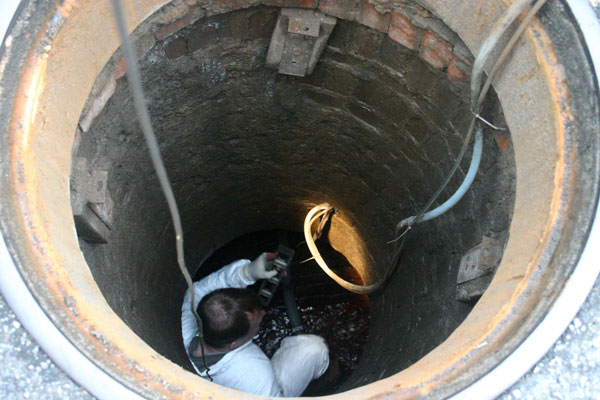
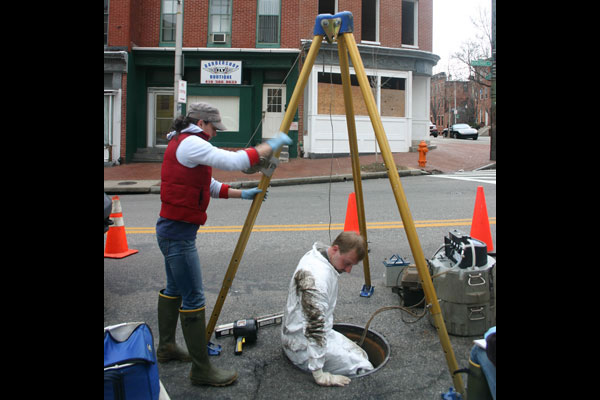
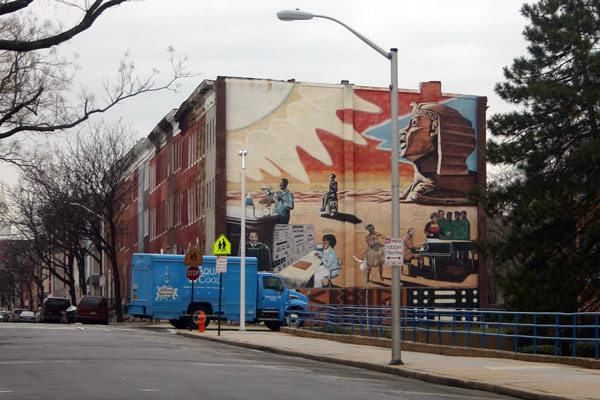
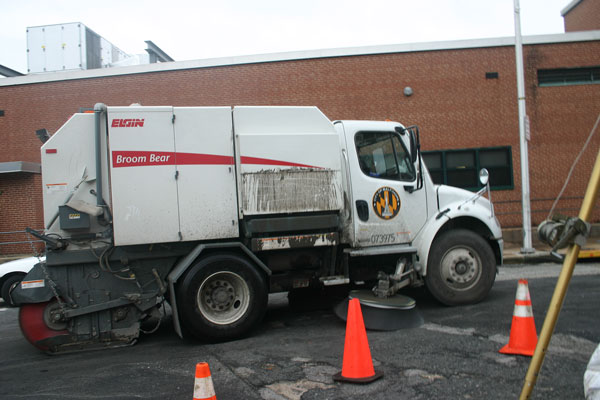
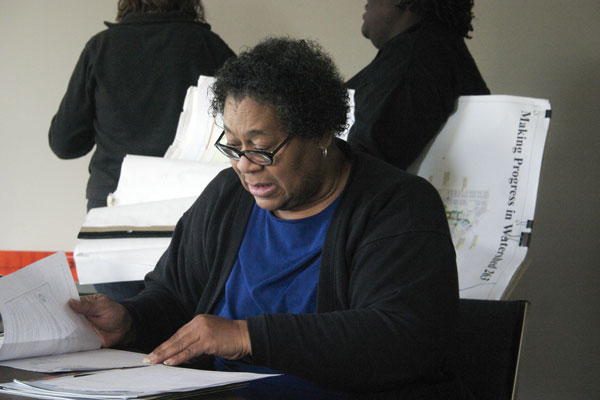
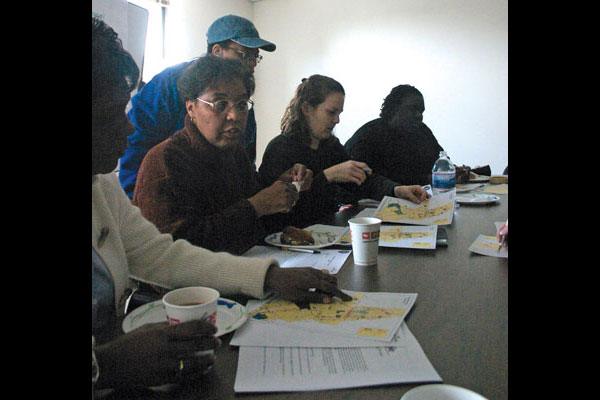
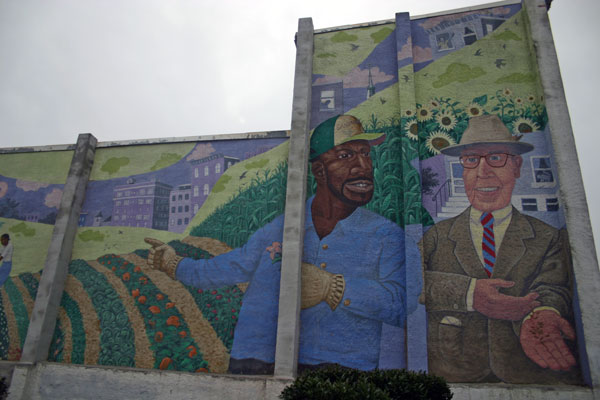
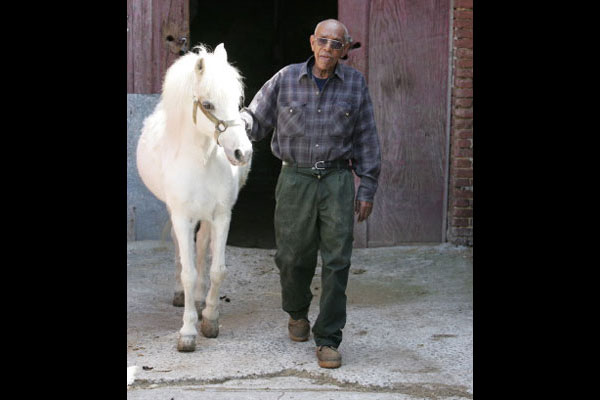
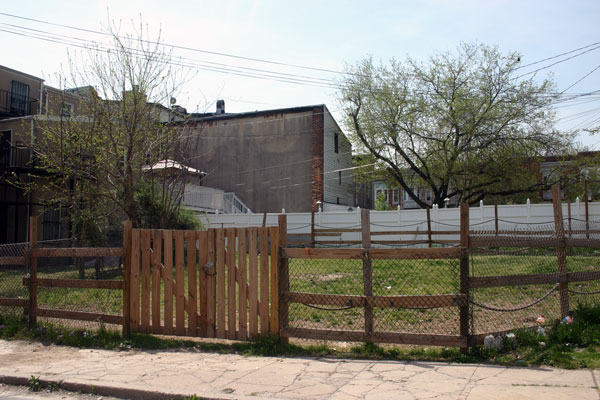
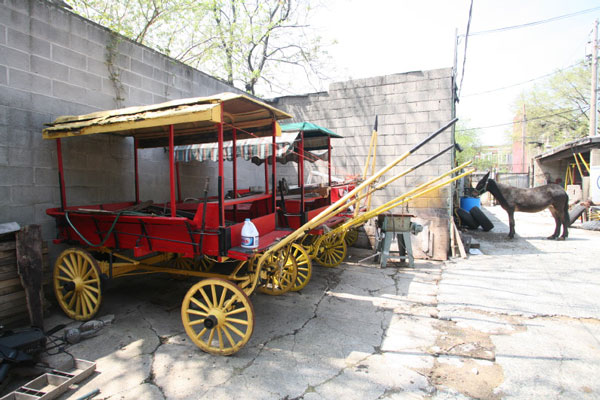
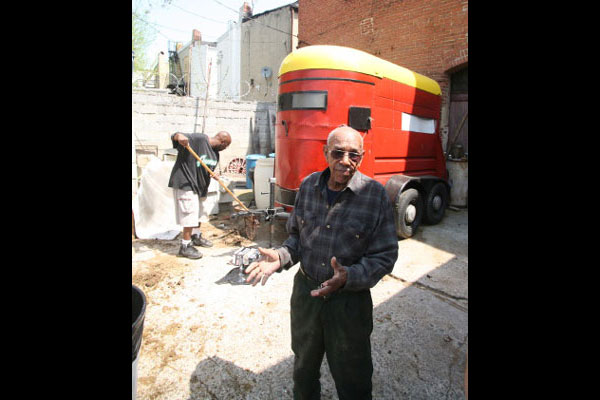
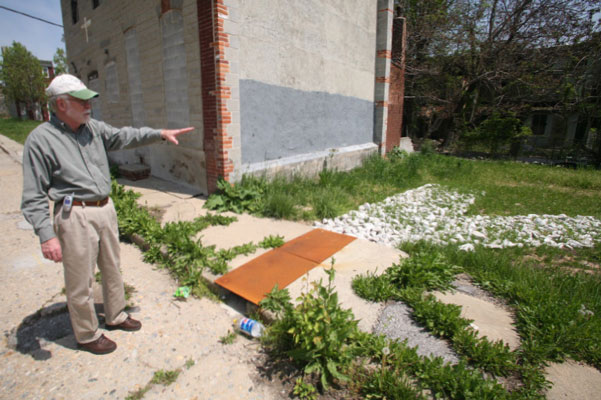
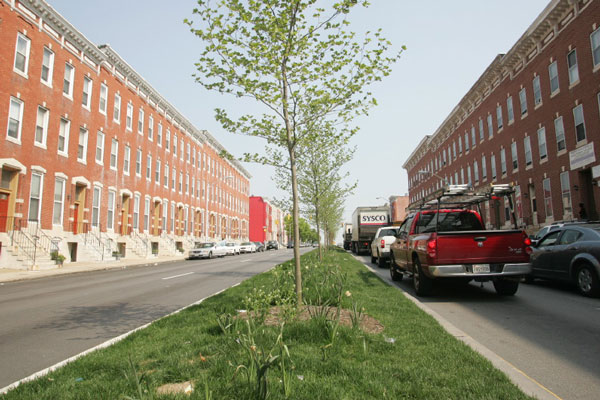
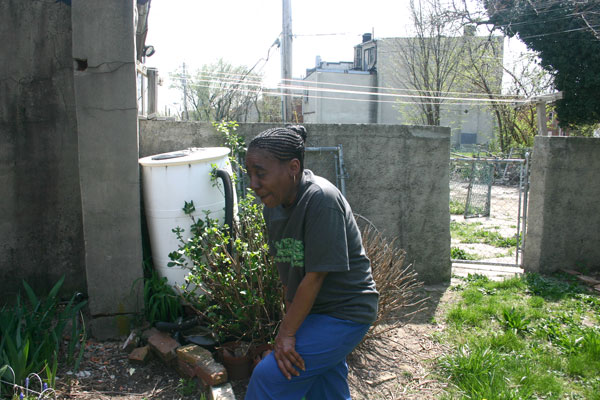
Water negotiates a web of concrete and steel as it flows toward Baltimore Harbor. This marks the end of a subterranean journey that began when rainwater cascaded off city streets into a network of pipes under West Baltimore. Erica GoldmanAt the bottom of a Baltimore Street storm drain, Matt Cherigo checks base flow conditions. Erica GoldmanEmma Noonan raises field technician Matt Cherigo out of a storm drain on Baltimore Street, one of two water quality sampling sites in Watershed 263. Erica GoldmanA mural down the street from Harlem Park Elementary School near the Lanvale Street water quality sampling site livens up a gray urban landscape. Erica GoldmanStreet sweepers near the water quality sampling site on Lanvale Street help to keep coarse particulate matter from entering the storm drain. Erica GoldmanAnnie Williams reviews the agenda for the monthly meeting of the Watershed 263 Community Stakeholder Council. She represents the neighborhood of Harlem Park. Erica GoldmanThe Watershed 263 Community Stakeholder Council hears a new proposal for spending $900,000. The funds, earmarked through the Department of Transportation, will help start construction of a greenway in the watershed. Erica GoldmanIn the neighborhood of Sandtown-Winchester in Watershed 263, a building-sized mural shows neighborhood resident Bill Hobbs (left), a highly respected leader and manager of open space projects in the community, standing with James Rouse (right), a nationally renowned developer and philanthropist who invested in Sandtown in the early 1990s. Hobbs has the vision for what Sandtown could look like, while Rouse holds the seeds, presumably money, that could make such a dream a reality. Erica GoldmanAt the Bruce Street stables, Ed Chapman leads his pony into the courtyard. Chapman has worked as an "arabber" selling produce on the streets of Baltimore from horse-drawn carts for nearly 75 years. Skip BrownWith help from the Parks & People Foundation, Chapman and fellow arabbers built an exercise yard for their horses across the street from the stables on Bruce Street Erica GoldmanColorful produce carts stand in the stable courtyard on Bruce Street, symbols of a fading way of life. Today, fewer than a dozen arabbers actively peddle their wares on the streets of Baltimore. Skip BrownEd Chapman talks about his work as an arabber. In the background, Gerryl Louden helps Chapman bag manure to remove from the stables. Skip BrownActivist Guy Hager, from the Parks & People Foundation, points out a bioretention project underway in a vacant lot in Watershed 263. Skip BrownTrees come to Fulton Street. A new, tree-lined median restores 1.5 miles of green space where a historic greenway once stood. Skip BrownCharlene Pinkney stands watch over her garden on Bruce Street. Behind her a homemade rain barrel collects rainwater that would otherwise flow into city storm drains. Erica GoldmanA vacant lot became a productive community garden, thanks to the Parks & People Foundation. Erica Goldman